The best way to avoid expensive garage repairs is consistent preventive maintenance. Small issues such as worn weather seals, loose hardware, and poor ventilation often grow into major problems when ignored. Studies show that preventive maintenance can reduce repair costs significantly, while garage doors remain among the most used moving systems in a home.
Many homeowners focus on visible living spaces and overlook the garage. However, this area protects vehicles, tools, and valuable belongings daily. Because garage systems operate constantly, regular inspections help prevent sudden breakdowns and unexpected expenses.
Understand Why Garage Maintenance Matters
A garage contains several mechanical and structural components working together. The door, tracks, springs, floor, and ventilation system all require attention. When one component fails, it often affects surrounding parts.
Neglect usually causes damage gradually. Therefore, homeowners often miss warning signs until repairs become costly. Routine maintenance helps identify problems before they worsen.
Inspect Your Garage Door Every Month
The garage door performs thousands of cycles annually. Because of this heavy use, regular inspections are essential. A quick monthly check can reveal developing issues early.
Look for unusual noises during operation. Also, check whether the door moves smoothly without jerking or hesitation. Consistent movement usually indicates healthy components.
Watch for Common Warning Signs
Pay attention to these symptoms:
: Grinding or scraping sounds
: Slow opening or closing speed
: Uneven movement during operation
: Sagging door sections
: Visible damage to tracks
These signs often indicate mechanical wear. Early action prevents larger failures later.
Keep Tracks Clean and Aligned
Garage door tracks guide movement during opening and closing. Dirt accumulation often causes friction and uneven operation. Therefore, cleaning tracks regularly improves performance.
Use a dry cloth to remove debris and dust. Then inspect the tracks for dents or misalignment. Even minor track damage can affect door balance.
Avoid forcing a misaligned door. Instead, address the issue promptly before additional components suffer damage.
Lubricate Moving Parts Properly
Friction shortens the lifespan of garage components. Consequently, proper lubrication remains one of the simplest maintenance tasks. It also helps reduce operational noise.
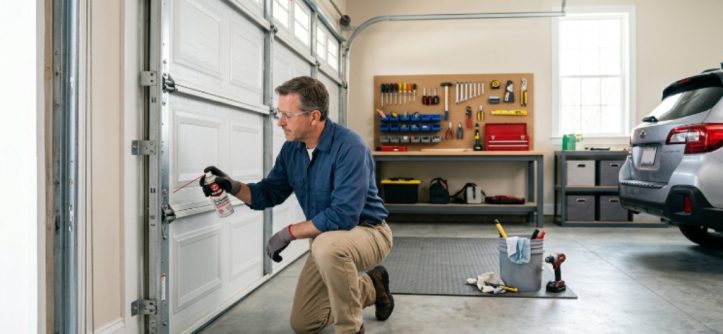
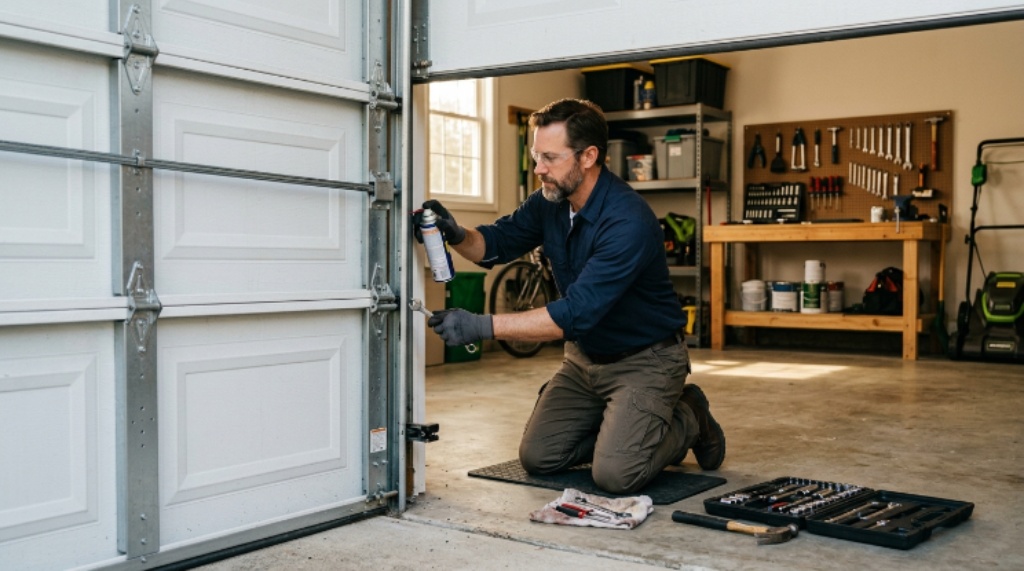
Apply garage door lubricant to rollers, hinges, and bearings. However, avoid excessive application because buildup attracts dust. Clean components first for better results.
Many homeowners forget this step entirely. Yet a few minutes of maintenance can significantly extend component life.
Test Garage Door Balance
An unbalanced garage door places excessive stress on the opener. As a result, motors wear out faster and energy consumption increases. Regular balance testing helps prevent these issues.
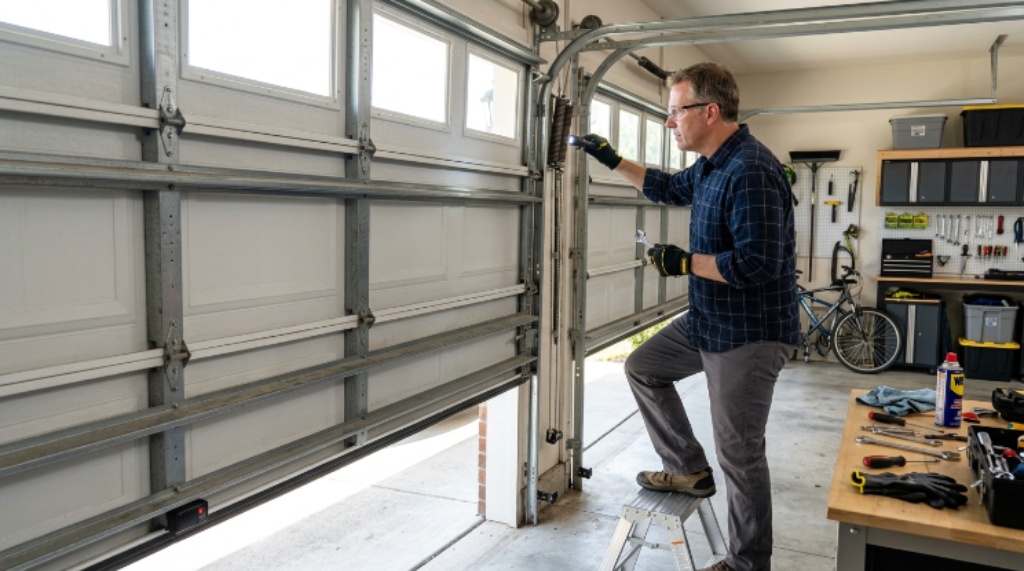
Disconnect the automatic opener carefully. Then lift the door halfway and release it gently. A balanced door should remain mostly in position.
If the door rises or falls quickly, balance problems may exist. Professional adjustment is usually the safest solution.
Examine Weather Seals Frequently
Weather seals protect the garage from moisture, pests, and outdoor temperatures. Unfortunately, these materials deteriorate over time. Sun exposure and seasonal changes accelerate wear.
Inspect seals along the bottom and sides of the door. Look for cracks, gaps, or hardened sections. Replacing damaged seals helps prevent water intrusion.
Additionally, proper sealing improves energy efficiency. This becomes especially important when the garage connects directly to living areas.
Protect the Garage Floor
Garage floors endure heavy loads, chemical spills, and moisture exposure. Without protection, cracks and surface deterioration become common. Preventive care preserves both appearance and durability.
Clean oil spills immediately after they occur. Furthermore, sweep debris regularly to prevent surface abrasion. Small habits make a significant difference over time.
Prevent Floor Damage
Consider these protective measures:
: Use floor mats beneath vehicles
: Seal concrete surfaces periodically
: Remove standing water quickly
: Avoid harsh chemical cleaners
: Repair small cracks early
These actions reduce long term deterioration. They also improve overall garage safety.
Control Moisture Levels
Moisture causes numerous garage problems. It encourages mold growth, rust formation, and structural deterioration. Therefore, moisture management deserves consistent attention.
Check walls and corners for signs of dampness. Also inspect around doors and windows after heavy rainfall. Early detection prevents extensive damage.
A dehumidifier may help in humid regions. Good ventilation also supports moisture control throughout the year.
Improve Garage Ventilation
Proper airflow protects stored items and structural components. Without ventilation, humidity and heat accumulate quickly. Consequently, materials deteriorate faster.
Ensure vents remain unobstructed by storage items. Additionally, open the garage periodically when weather permits. Fresh air circulation helps maintain healthier conditions.
Ventilation also reduces unpleasant odors. This creates a cleaner and more comfortable environment overall.
Organize Storage Correctly
Poor storage practices often contribute to garage damage. Heavy items placed improperly can strain shelves and create safety hazards. Organization supports both efficiency and maintenance.
Store frequently used items within easy reach. Meanwhile, keep hazardous materials in secure locations. Organized spaces make inspections easier and more effective.
Clutter also hides developing problems. Therefore, maintaining order helps homeowners identify issues sooner.
Smart Storage Guidelines
Follow these storage practices:
: Use sturdy wall mounted shelving
: Label storage containers clearly
: Keep pathways unobstructed
: Store chemicals safely
: Avoid overloading shelves
These habits improve safety and preserve garage infrastructure.
Check Garage Door Sensors
Modern garage doors rely on safety sensors. These devices prevent accidents by detecting obstacles. However, dirt and misalignment can affect performance.
Test sensors regularly using a safe object. The door should reverse immediately when detection occurs. Reliable sensors are essential for household safety.
Clean sensor lenses carefully with a soft cloth. This simple step often resolves performance issues.
Inspect Electrical Components
Garage electrical systems power lighting, outlets, and door openers. Faulty wiring increases safety risks and repair costs. Therefore, regular inspections are important.
Look for damaged cords or exposed wiring. Also check whether outlets function properly. Any electrical concerns deserve prompt attention.
Avoid overloading circuits with excessive equipment. Balanced electrical usage helps prevent system strain.
Maintain the Garage Door Opener
The opener serves as the operational center of the garage door system. Regular maintenance improves reliability and extends lifespan. Small adjustments often prevent major failures.
Inspect mounting brackets and hardware periodically. Tighten loose fasteners when necessary. Vibration gradually loosens connections over time.
Additionally, replace remote batteries before they fail completely. Consistent performance reduces unnecessary troubleshooting.
Watch for Pest Activity
Garages often attract insects and rodents seeking shelter. Once established, pests can damage wiring, insulation, and stored belongings. Prevention remains the most effective strategy.
Inspect corners and storage areas regularly. Seal small entry points around walls and doors. Eliminating access reduces infestation risks significantly.
Clean spaces also discourage pest activity. Therefore, routine housekeeping supports long term protection.
Prepare for Seasonal Changes
Different seasons create different garage maintenance challenges. Temperature fluctuations affect materials and mechanical systems. Consequently, seasonal inspections are highly beneficial.
Before winter, inspect weather seals and insulation. Before summer, evaluate ventilation and moisture control systems. Seasonal preparation minimizes weather related damage.
These inspections require little time. Yet they often prevent expensive repairs later.
Know When Professional Help Is Necessary
Some garage tasks remain suitable for homeowners. However, certain repairs involve significant safety risks. Understanding these limits protects both people and property.
Garage door springs store substantial tension. Therefore, spring repairs require specialized knowledge and equipment. Attempting these repairs independently can be dangerous.
Professional inspections also identify hidden issues. Expert evaluation often prevents larger future expenses.
Create a Simple Maintenance Schedule
Consistency matters more than complexity. A basic maintenance schedule ensures important tasks never get overlooked. Regular attention reduces unexpected repair costs significantly.
Consider this routine:
: Monthly inspections of doors and tracks
: Quarterly lubrication of moving parts
: Seasonal weather seal checks
: Annual professional inspection
: Immediate response to unusual noises
Following a schedule transforms maintenance into a manageable habit. Consequently, long term ownership becomes less expensive.
Conclusion
Avoiding costly garage repairs starts with proactive maintenance rather than reactive fixes. Regular inspections, proper lubrication, moisture control, and organized storage help prevent many common problems before they become expensive emergencies.
Start implementing these essential garage tips today. A few minutes of maintenance each month can protect your investment, improve safety, and save substantial repair costs over time.
FAQs
How often should I inspect my garage door?
A monthly inspection helps identify issues before they become serious repairs.
What causes most garage door failures?
Lack of maintenance, worn components, and ignored warning signs cause most failures.
Should garage door tracks be lubricated?
No, tracks should stay clean while rollers and hinges receive lubrication.
How can I prevent moisture damage in my garage?
Maintain good ventilation, repair leaks quickly, and control humidity levels.
When should I call a professional garage technician?
Contact a professional for spring repairs, balance issues, or complex mechanical problems.