Freezing Food in Ovenable Trays Safely
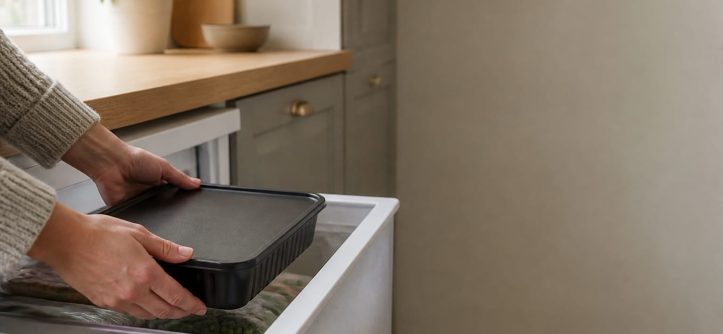
Freezing meals in the tray that you will later use to cook them in saves on washing up. There are a few things you have to do first to make sure it works safely though.
Cool Food Fully First
First of all, remember that hot food must never be placed directly in the freezer. Not only will it increase the temperature of the freezer to a danger zone for other foods, but also it could warp the tray before it even has a chance to freeze. Let the food cool to room temperature and then freeze it. It’s also worth reading the NHS guidance on cooling down food before you freeze it in order to understand the best practice and get an idea of how long it will take to cool down.
Check the Tray Is Rated for Both
While many oven safe trays are able to withstand temperatures of 200°C in the oven, this does not necessarily mean that they will be able to cope with the freezing temperatures of the fridge/ freezer and subsequently split/ crack. Check your tray for packaging/ labelling that confirms it is suitable for both freezer and oven use. If in doubt, check the manufacturers’ specification for the tray in question.
Leave Room for Expansion
If you’re freezing liquids then they will expand when they freeze. So it’s wise to leave some room for expansion in your tray, perhaps an inch or so at the top. This will stop your tray splitting or even cracking as the contents freeze. A soup or even a very wet stew would need more space than others.
Seal Tightly Against Freezer Burn
Using cling film over the top of the food before placing the lid on can help prevent ice crystals from penetrating the food and causing freezer burn. Squeeze as much of the air out of the cling film as possible before placing the lid on top of the tray. This will help in keeping the texture and flavour of your food for a longer time, especially if it has a lot of sauce in it, as this is the first thing to go when exposed to air.
Label Every Tray Clearly
Be sure to label your meals with the type of food, the date it was placed in the freezer and the portion size of the meal. Many of our trays are printed with on-pack recycling labelling for food trays, so make sure to check the back of the tray when you have finished using it for recycling purposes.
Decide How You’ll Cook It
As long as a dish has reached a safe core temperature when cooked from the freezer or has been safely defrosted first, it can be very convenient to cook from frozen. However, cooking from frozen does take longer than defrosting first and it is always worth checking the temperature in the middle of the dish to ensure it has reached a safe temperature. Defrosting first, such as overnight in the fridge, results in more even cooking and less time in the oven than cooking from frozen. Poutry pies and lasagnes are good examples of dishes that are best defrosted first.
By following these steps, you can rest assured that your food will be safely transferred to the freezer and then cooked from the freezer without any damage to the container.