
Paris is never more alive than in September. Streets buzz with ideas. Galleries throw open their doors. Designers from across the world descend on the city to share their latest work. Paris Design Week 2026 runs from September 10 to 19, and it is one of the most exciting editions yet. Whether you are a seasoned design professional or simply someone who loves beautiful spaces, there is something here for you.
This guide walks you through the best exhibitions to visit, the key venues to know, and everything you need to plan your trip well.
What Makes Paris Design Week 2026 Special
This year’s edition carries a bold theme: “Pulse in Motion.” The idea is design as energy — something alive, shifting, and full of possibility. The theme was developed in collaboration with trend agency NellyRodi, and it runs through every corner of the event.
The Spanish design studio Masquespacio serves as the official ambassador for this edition. They have created two major installations — one inside the Maison&Objet fair and one spread across the city itself. Their dual-perspective poster also defines the visual identity of the entire autumn edition. It is a striking choice. Masquespacio is known for bold colour, playful forms, and a deeply human approach to space. Their presence gives this year’s event a vibrant, optimistic energy.
Additionally, the event spans ten full days across four of Paris’s most design-rich districts. Over 450 venues take part, including showrooms, boutiques, workshops, hotels, restaurants, museums, and galleries. The sheer scale is extraordinary.
Maison&Objet: The Heart of the Event
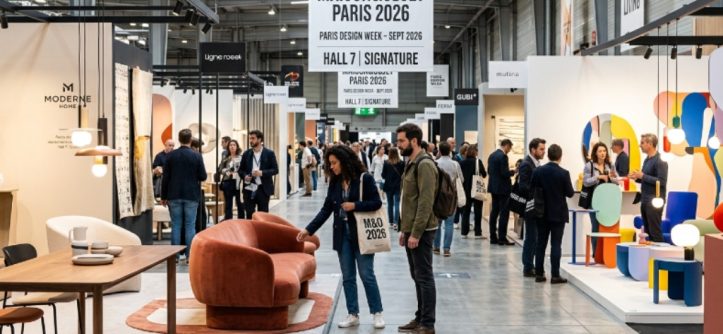
The anchor of Paris Design Week is always Maison&Objet, the world-renowned trade fair for home décor, interior design, and lifestyle. In September 2026, it runs from September 10 to 14 at Paris Nord Villepinte Exhibition Centre.
This edition brings together over 2,100 brands from around the world. More than 620 of them are first-time exhibitors. Visitors can expect to see the very latest in furniture, textiles, fragrance, tableware, accessories, fashion, and craft.
The fair is organised into seven immersive worlds: Cook&Share, Decor&Design, Fine Craft, Wellness&Beauty, Fragrance&Ambiance, Fashion&Accessories, and Gift&Play. Each sector offers its own rhythm and discovery. You could easily spend a full day in just one area.
However, the fair is not only about products. It is also about ideas. The Maison&Objet Pulse programme runs alongside the exhibitions, offering keynotes, conferences on sustainable design, practical workshops, and networking spaces. This makes it valuable for professionals and curious visitors alike.
Design District: The Show Within the Show
One of the most talked-about features of the fair is the Design District. Driven by the artistic direction of the Hall Haus collective, it functions as what organisers describe as “an incubator of creative energy.” Think of it as a curated mini-festival within the larger fair.
Design District is where you find the most forward-thinking work. It gathers experimental designers, new voices, and unconventional ideas in one concentrated space. The Hall Haus collective brings a sharp curatorial eye to the selection. Therefore, every piece here feels considered and intentional.
If you only have limited time at the fair, this is the section to prioritise. It consistently produces the moments that people remember long after the event ends.
Paris Design Week Factory: Where Emerging Talent Shines
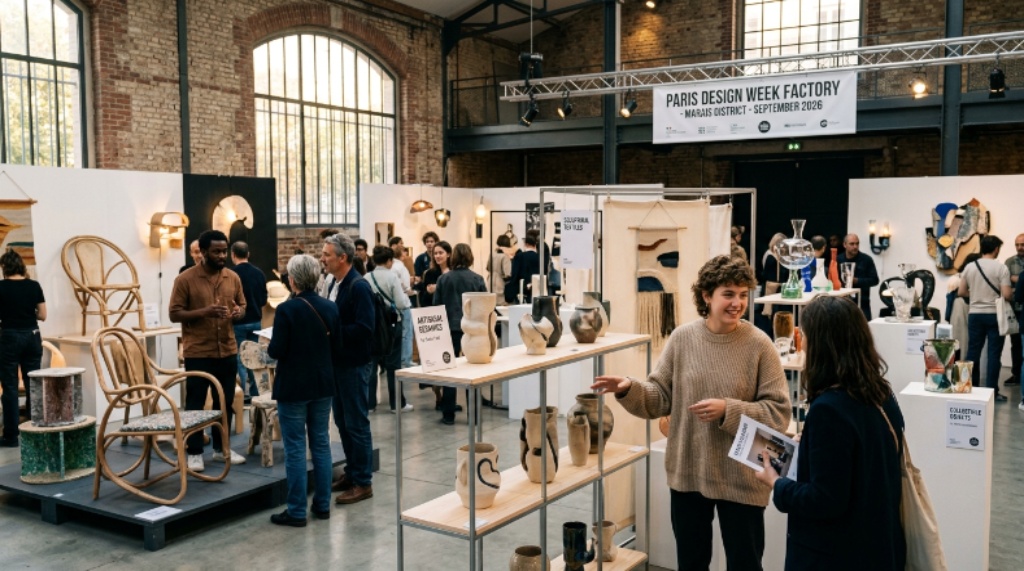
For those who love discovering the next generation, Paris Design Week Factory is unmissable. Running from September 10 to 14 in the Marais district — at Espace Commines and Galeries Joseph — it is free and open to all.
The Factory is divided into four thematic exhibitions: Collectible, Publishing (Editions), Craft, and a Special Focus on China. Each section showcases designers with less than five years of professional experience. The work must be original and produced within the last 18 months. This strict curation ensures that everything on show is genuinely fresh.
The Marais setting is a perfect match for the energy of emerging design. These narrow streets and elegant courtyards have long been a home for creative exploration. Walking from one gallery to the next becomes part of the experience itself.
Additionally, the Factory gives visitors a rare chance to speak directly with designers, ask questions, and understand the thinking behind each piece. That kind of access is hard to find anywhere else in the design world.
Anthony Guerrée at the Bourdelle Museum
One of the most anticipated cultural highlights this September is the collaboration between designer Anthony Guerrée and the Bourdelle Museum. The museum, dedicated to the sculptor Antoine Bourdelle, provides a magnificent and somewhat unexpected backdrop for contemporary design.
Guerrée is known for work that is sensitive and poetic. His installations often respond to the spaces they inhabit rather than dominating them. Therefore, placing his work alongside Bourdelle’s monumental sculptures promises a conversation between eras — between the weight of the past and the lightness of new ideas.
This kind of programming is what sets Paris Design Week apart from other design events. It does not confine design to fair halls. Instead, it invites design into museums, restaurants, parks, and private courtyards. The city itself becomes the exhibition.
Galerie Joseph: Design in Heritage Spaces
Galerie Joseph is a network of around thirty exhibition spaces located in the Marais district. Each space is set within a heritage building — old hôtels particuliers, vaulted cellars, and grand salons that date back centuries.
During Paris Design Week, these spaces come alive with installations, product launches, and concept presentations from designers across many disciplines. The contrast between old architecture and new design is always striking. It creates a depth that a purpose-built exhibition hall simply cannot replicate.
The Marais district itself is worth exploring on foot. Many of the most interesting pop-up events and impromptu displays happen in spaces with no signage at all. The best discoveries are often the unplanned ones.
The City as Exhibition: Four Design Districts
Beyond the fair and the Factory, Paris Design Week transforms four whole neighbourhoods into living design destinations. These are the Saint-Germain-des-Prés district, the Marais, the northern design corridor around the 10th arrondissement, and the area around the Palais-Royal.
Each district has its own character. Saint-Germain is home to storied antique dealers, high-end fabric houses, and design galleries with decades of history. The Marais mixes fashion, art, and contemporary design in a dense and walkable quarter. The 10th arrondissement is rougher around the edges and more experimental. The Palais-Royal area offers a quieter, more refined experience.
Over 450 key locations set the scene across all four districts. Showrooms open their doors to the public. Restaurants dress their interiors in new collections. Hotels present specially commissioned pieces. The effect is that design feels woven into daily life rather than set apart from it.
Sustainable Design: A Running Thread
One of the clearest themes running through Paris Design Week 2026 is sustainability. This is not a single exhibition but a sensibility that shapes many of the conversations and presentations across the event.
Several exhibitors at Maison&Objet are presenting collections built entirely from recycled or upcycled materials. Workshops throughout the week address circular design, natural dyes, and responsible sourcing. Keynote speakers include voices from architecture, fashion, and product design, all grappling with the same question: how do we make beautiful things without damaging the world?
However, the approach here is rarely preachy. The best sustainable design at this event is simply great design — objects and spaces that work well, feel good, and happen to tread lightly. That is a more persuasive argument for change than any lecture.
Danish Design: A Special Spotlight
A dedicated focus on Danish design is one of the highlights of this year’s programme. Described by organisers as “timeless, minimalist, and iconic,” Danish design has a long history of influence on the wider world. However, this spotlight is not nostalgic.
The presentations at Paris Design Week 2026 show how Danish studios are working today: with new materials, new technologies, and a fresh set of questions about how people want to live. The result is work that honours a great tradition while pushing confidently forward.
Fans of Scandinavian design will find this thread running through several venues across the city. It is worth planning your route to take them all in.
Tips for Visiting Paris Design Week 2026
Visiting well makes a real difference. Here are a few practical suggestions.
- Start with the Maison&Objet fair early in the week. It is large and benefits from unhurried time.
- Allocate at least half a day to the Marais district on foot. Many of the best Factory exhibitions are free and close together.
- Check the Paris Design Week website for vernissage events. These opening evenings often offer the best access to designers themselves.
- Comfortable shoes matter more than you might expect. The distances between venues add up quickly.
- Leave space in your schedule for the unexpected. Some of the most memorable moments happen in spaces that are not on any official map.
Conclusion
Paris Design Week 2026 is a ten-day celebration of creativity in one of the world’s most beautiful cities. The “Pulse in Motion” theme sets an energetic and forward-looking tone. Maison&Objet brings together over 2,100 brands under one roof. The Design District offers the sharpest emerging ideas. Paris Design Week Factory gives direct access to new talent in the heart of the Marais. The Bourdelle Museum provides one of the most poetic settings in the programme. And four entire neighbourhoods transform into living exhibitions, making the whole city part of the experience.
Whether you come for one day or the full ten, Paris in September 2026 will reward every design lover who makes the trip.
Frequently Asked Questions
When does Paris Design Week 2026 take place?
Paris Design Week 2026 runs from September 10 to 19, 2026, across four design districts in Paris. Maison&Objet, the main trade fair, takes place from September 10 to 14 at Paris Nord Villepinte Exhibition Centre.
Is Paris Design Week free to attend?
Many events are free, including Paris Design Week Factory and most of the city-wide exhibitions across the four districts. Maison&Objet is a trade fair that requires a ticket for entry.
What is the theme of Paris Design Week 2026?
The theme is “Pulse in Motion,” developed with trend agency NellyRodi. Spanish design studio Masquespacio serves as the official ambassador and has created installations both at the fair and across the city.
What is Paris Design Week Factory?
Paris Design Week Factory is a free showcase of emerging design talent held in the Marais district. It features four thematic exhibitions — Collectible, Editions, Craft, and a Special Focus on China — and is open to the general public.
How do I get around Paris Design Week?
The city-side events are spread across four main districts, most of which are walkable or easily reached by Paris Métro. The Maison&Objet fair at Paris Nord Villepinte is accessible by shuttle bus from Charles de Gaulle airport and by direct RER line from central Paris.