
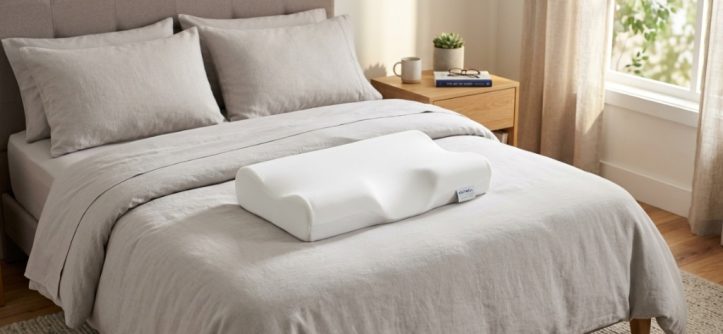
Waking up with a stiff, aching neck is a miserable way to start the day. You toss and turn all night, trying to find a position that doesn’t send sharp pain shooting up your spine. If this sounds familiar, you are not alone. Neck pain is one of the most common musculoskeletal complaints worldwide. The root cause often lies in poor sleep posture and, more specifically, an unsupportive pillow. The solution isn’t just any pillow; it’s about finding the best cervical pillow for neck pain that aligns your spine and supports your head’s natural curve. This guide cuts through the marketing noise to give you a practical, evidence-based approach to choosing the right support for a pain-free morning.
What Exactly Is a Cervical Pillow and How Does It Differ from a Standard Pillow?
A cervical pillow is a specially designed sleep aid that contours to the natural curve of your neck (cervical spine). Unlike flat, fluffy standard pillows that simply prop up your head, cervical pillows provide structured support to maintain spinal alignment from your head down to your shoulders. The goal is to prevent your neck muscles from straining while you sleep.
The Core Design Principle: Supporting the Curve
Your neck has a natural inward curve called lordosis. Standard pillows often push your head forward, flattening this curve and stretching the muscles and ligaments. Cervical pillows, however, are engineered to fill the space between your neck and the mattress. They cradle the head and support the neck’s arch, reducing pressure points and allowing muscles to relax completely.
Key Differences You Need to Know
- Shape: Standard pillows are rectangular and flat. Cervical pillows often have a contoured shape with a dip for the head and a raised ridge for the neck.
- Material: Cervical pillows use memory foam, latex, or specialized cooling gels that offer support rather than just softness.
- Firmness: They are generally firmer to provide structure, whereas standard pillows are often soft and compress easily.
- Purpose: Standard pillows are for general comfort; cervical pillows are a therapeutic tool for alignment and pain relief.
Why Does Neck Pain Often Originate from the Wrong Pillow?
Neck pain is frequently a postural issue. When you sleep, your head—which weighs 10-12 pounds—needs a base that keeps it in a neutral position. If your pillow is too high, your neck flexes upward. If it’s too low, your neck tilts downward. Both positions cause muscle strain that leads to pain, stiffness, and even headaches. The right best cervical pillow for neck pain corrects this by providing tailored support that keeps your ear, shoulder, and hip aligned.
The Biomechanics of Sleeping Positions
Your sleeping position dictates the height and firmness of the pillow you need. Side sleepers need a thicker pillow to fill the gap between the ear and the outside shoulder. Back sleepers need a thinner, contoured pillow to support the neck without pushing the head too far forward. Stomach sleeping is generally discouraged but requires a very flat, soft pillow to minimize neck rotation.
The Instability Factor
Your head moves approximately 20 to 30 times during a single night’s sleep. A soft, standard pillow offers no stability, causing your neck to readjust constantly in search of support. This micro-movement disrupts sleep cycles and keeps muscles tense. A cervical pillow creates a stable “cradle” that minimizes unnecessary movement, allowing deeper, more restorative sleep.
Which Sleep Position Should Determine Your Cervical Pillow Choice?
Your sleep position is the single most important factor in choosing a cervical pillow. There is no one-size-fits-all option. A pillow perfect for a back sleeper will be uncomfortable and painful for a side sleeper. Determine your primary position before considering any other feature.
For Side Sleepers: High Loft and Firm Support
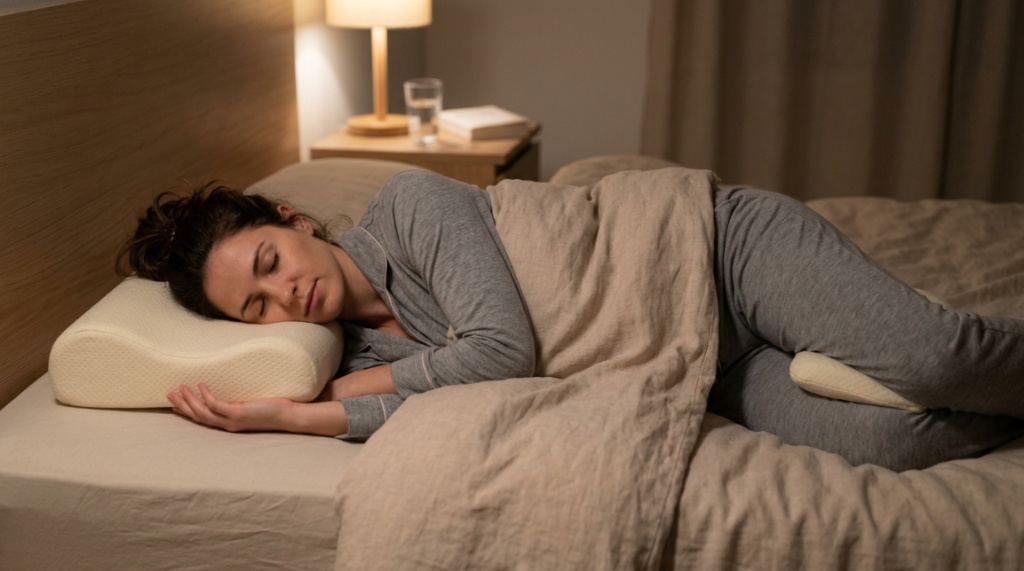
The Need: The pillow must fill the distance from the side of your head to your shoulder, keeping the spine straight. Recommended Design: Look for a pillow with a high loft (thickness) and a firm density. Contoured pillows with a higher side wall are excellent. They provide the necessary resistance to prevent the head from sinking and creating a sideways bend in the neck.
For Back Sleepers: Contour and Medium Loft
The Need: Support the natural curve without propping the head up too much. Recommended Design: A contoured cervical pillow with a lower loft is ideal. The central dip cradles the head, while the raised neck ridge fills the space behind the neck. This provides support while keeping the forehead and chin aligned with the chest.
For Combination Sleepers: Adaptive Materials
The Need: A pillow that works in multiple positions. Recommended Design: Consider a pillow with a lower profile and a softer, yet supportive, material like shredded memory foam. You can adjust the fill to customize the loft for different positions, or choose a pillow with dual-density layers that provide support whether you’re on your back or side.
How Do You Determine the Correct Pillow Height (Loft)?
Determining the correct loft is about geometry. The height of the pillow should equal the distance between your head’s outermost point and your shoulder (for side sleepers) or the distance from the mattress to the small of your neck (for back sleepers). A simple test can help you identify the correct height before you even buy a pillow.
The “Ear-Shoulder” Test for Side Sleepers
Step 1: Lie on your side in your normal sleeping position. Step 2: Measure the distance from the side of your head (just above the ear) to the outside of your shoulder. This measurement in inches is your ideal pillow loft. Step 3: If your chin points upward, your pillow is too high. If your chin points downward (chin tucking into chest), your pillow is too low. Your chin should be parallel to the floor.
The “Vertical Line” Test for Back Sleepers
Lie on your back. A good pillow should keep your forehead slightly higher than your chin. If you feel your jaw is pressing against your chest, the pillow is too thick. If your chin is pointing toward the ceiling, it’s too thin. The goal is for your ear to be in line with the center of your shoulder to maintain a neutral spine.
What Materials Offer the Best Support for Migraine and Neck Pain Relief?
The material of the pillow determines its support, durability, and temperature regulation. Regarding cervical support, materials fall into two categories: those that retain shape and those that are adjustable. The right material can significantly impact your comfort and pain levels.
Memory Foam: The Gold Standard for Conforming Support
Viscoelastic foam, or memory foam, responds to body heat and pressure, molding to the unique contours of your head and neck. This provides even weight distribution and reduces pressure points, integral for cervical support. However, traditional memory foam can trap heat. Look for gel-infused or open-cell versions that dissipate heat, especially if you sleep warm.
Latex: The Responsive and Durable Alternative
Natural latex is bouncier and more responsive than memory foam. It offers a firm support that pushes back against your neck, which some find more comfortable for spinal alignment. It is also naturally hypoallergenic and resistant to dust mites. Latex is heavier and bouncier, which might not be ideal if you prefer a sinking-in feeling. This makes it a durable, long-lasting option for neck pain relief.
Can a Cervical Pillow Help with Migraines and Headaches?
Yes, for many people. A significant number of migraines are triggered by muscular tension in the neck and shoulders—a condition called cervicogenic headaches. When you sleep wrong, you put undue stress on the upper cervical spine (C1-C3), which can trigger a nerve pathway that leads to migraines. A cervical pillow alleviates this stress by holding the neck in a neutral, relaxed position.
The Link Between Cervical Spine Dysfunction and Migraines
The trigeminal nerve, the main nerve involved in migraines, has connections to the upper cervical spinal cord. Poor sleep posture can cause muscle spasms and joint irritation in the upper neck, which sends pain signals to the brain, triggering a migraine. A supportive pillow reduces this irritation, potentially reducing the frequency and intensity of these headaches.
Reducing Morning Headaches Through Stabilization
Migraine sufferers often wake up with “morning headaches” due to clenching or awkward sleeping angles. A contoured pillow provides a stable groove that discourages rolling into a bad position. It also minimizes the load on the craniocervical junction, preventing the inflammation that can lead to headaches upon waking. If you suffer from migraines, choosing the right support is a practical step toward prevention.
How Soft Should a Cervical Pillow Be for Maximum Comfort and Alignment?
A common misconception is that you need a soft pillow for comfort. For cervical pillows, this is usually a mistake. The pillow must be firm enough to keep your head from sinking too deep, which misaligns the spine. However, it shouldn’t be rock-hard; it needs a “give” to avoid creating new pressure points.
The “Sink vs. Support” Balance
The rule of thumb is: the IF the pillow is too soft, it offers no resistance, and your head sinks, causing the muscles on the underside of your neck to overstretch. If it’s too hard, it pushes into the sensitive areas, causing pain. The sweet spot is a medium-firm to firm feel where it yields slightly under pressure but maintains its structural shape.
Testing Firmness: The “Palm Press” Test
Use your palm to press down on the center of the pillow. If it takes more than five seconds to spring back and fully recover, it’s likely too slow-responding for support. If it barely compresses, it’s too firm. For a cervical pillow, look for one that compresses about 1 to 1.5 inches under firm pressure and then slowly regains its shape.
What Should You Look For in a Pillow for Chronic Neck Pain?
When dealing with chronic pain, the stakes are higher. You need more than just a pillow; you need a therapeutic device. Focus on ergonomic design, material certifications, and adjustability. A high-quality pillow should offer a “customizable” fit.
Adjustable Fill for Fine-Tuned Alignment
Pillows with removable inner fill (shredded memory foam or latex) allow you to adjust the loft to your exact needs. This is crucial for chronic sufferers because your neck height may change if your pain alters your posture. You can add or remove material to find your perfect resting spot, giving you control over your sleep posture.
Edge-to-Edge Support
For side sleepers, a pillow that compresses at the edges is useless. Look for a contoured pillow that maintains its height at the outer edges. This ensures that even as you press into the pillow, the side walls stay firm, keeping your neck aligned and preventing the shoulder from cramping up.
Certifications and Quality
Since you’ll be breathing this in for hours, look for CertiPUR-US® certification (for foam) or OEKO-TEX® Standard 100. These ensure the pillow is free from harmful chemicals and heavy metals. This is particularly important for those with chronic conditions or chemical sensitivities,While choosing the best cervical pillow for neck pain addresses your upper spine alignment, you can also relieve lower back and hip pressure by pairing it with affordable knee pillows for side sleepers.
When Should You Replace Your Old Pillow for a Cervical One?
If you are waking up with pain, numbness, or tingling in your arms and hands, it’s time to change. Also, if your pillow has lost its shape, shows visible lumps, or smells musty, it’s past its prime. As a general rule, a quality cervical pillow should be replaced every 18 to 24 months.
Signs Your Pillow is Failing You
- Morning Stiffness: You need to “crack” your neck upon waking.
- Visible Wear: The pillow has indents that don’t bounce back.
- Allergy Symptoms: Dust mites and allergens accumulate over time.
- Pinched Nerve Symptoms: Tingling or numbness in your fingers indicates sustained pressure on nerves, a sign the pillow is not supporting you correctly.
How to Transition to a Cervical Pillow Without Increasing Pain?
Switching from a fluffy down pillow to a firm memory foam one can be jarring. Your neck muscles have adapted to the wrong position and will resist. To avoid adding pain to the process, transition gradually. Do not throw away your old pillow on day one.
Step-by-Step Transition Plan
Week 1: Start by using the cervical pillow for only the first 2-3 hours of the night. Switch back to your old pillow if you wake up. Week 2: Increase the usage to 4-5 hours. Week 3: Try to use it all night, but keep the old pillow nearby as a backup. Week 4: The cervical pillow should feel natural. If not, check if it’s the correct height. This gradual approach allows your muscles to lengthen and adapt without triggering severe spasms.
Realistic Expectations: How Long Until You Feel Relief?
Many users report initial discomfort for the first 3-5 nights. This is your muscles releasing chronic tension. Most people begin to notice a significant reduction in morning pain within 10-14 days of consistent use. However, this is not a magic bullet. If your pain is caused by an underlying condition like arthritis, a herniated disc, or a severe injury, a pillow is only one component of your treatment plan.
When to Seek Medical Attention
If you experience pain that radiates down your arms, numbness, or weakness, or if the pain persists after 3 weeks of using a proper pillow, consult a healthcare provider. A cervical pillow is a supportive tool, not a cure for structural pathologies.
Complementary Nighttime Habits
To maximize results, avoid sleeping on your stomach. Place a rolled towel under your knees (back sleeping) to reduce lower back strain, which ironically affects neck pain. Also, ensure your work desk ergonomics are correct, as daytime posture heavily impacts nighttime sleep posture.
How to Choose the Best Cervical Pillow for Neck Pain for Your Budget?
The cost of cervical pillows ranges from $30 to over $150. Price is often correlated with material quality and brand reputation, but expensive doesn’t always mean better. You are paying for materials (like natural latex vs. standard foam) and features (like cooling gel). Decide which features are non-negotiable for you—cooling, adjustability, or hypoallergenic materials—and budget accordingly.
Budget vs. Premium: What is the Difference?
Budget (Under $50): Usually made of low-density memory foam. They may wear out quickly but can be effective for beginners trying this type of support. Premium ($80+): Typically made of high-grade, longer-lasting foam or latex. They often include advanced cooling technologies and adjustable features. If you are seeking long-term relief, investing in durability is often cheaper in the long run than buying a new cheap pillow every 8 months.
As you finalize your decision, resources that compare top-rated models and user experiences can be incredibly helpful. We have curated a list of top performers in this category to help you find the precise best cervical pillow for neck pain that fits your sleeping style and budget, aiding in your journey toward consistent, restful sleep.
Frequently Asked Questions
Is it normal for a cervical pillow to hurt at first?
Yes, mild discomfort is normal for the first few nights. Your neck muscles are adjusting to a new, correct position. This should subside within a week. If you experience sharp pain or increased numbness, stop using it and check that the pillow’s height and loft are correct for your sleeping position.
Can I use a cervical pillow if I sleep on my stomach?
Stomach sleeping is the hardest on the neck. A traditional cervical pillow is usually too thick for this position. If you must sleep on your stomach, use a very flat, soft pillow under your head, or no pillow at all, and place a flat pillow under your hips to reduce lower back strain.
Should a cervical pillow be firm or soft?
It should be medium-firm. It needs to be firm enough to support the weight of your head and maintain spinal alignment, but soft enough to be comfortable. The “sink factor” should be minimal to prevent muscle strain but with enough give to avoid pressure points.
How long does a cervical pillow last?
Most high-quality cervical pillows last between 1.5 to 2 years. Memory foam loses its elasticity over time. If you notice the pillow no longer maintains its shape or you start developing neck pain again, it’s time for a replacement, even if it looks okay.
Can a cervical pillow fix my posture?
A cervical pillow can help correct nighttime posture. By supporting your neck correctly, it allows your spine to rest in a neutral position. However, it cannot fix chronic daytime posture issues caused by desk work or texting. It is one part of a holistic approach to posture.
Is a contoured pillow better than a roll pillow for neck pain?
A contoured pillow is generally better for most users. A roll (cylindrical) pillow provides support only under the neck, but the head lacks support, which can cause a strain on the jaw. A contoured pillow supports both the head and the neck simultaneously, offering balanced support and better overall alignment.
Conclusion
Choosing the best cervical pillow for neck pain is a decision that impacts your health, energy, and daily comfort. It is not about picking the most expensive option but the one that aligns with your specific sleep position and body mechanics. Remember to prioritize loft, firmness, and material. Be patient during the adaptation period, and listen to your body. A few nights of adjustment are a small price to pay for years of pain-free mornings and deeper, more restorative sleep. Your journey to waking up refreshed begins with the conscious choice to support your neck correctly tonight.