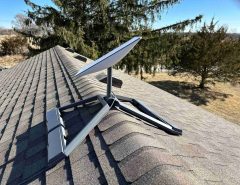
Roof penetrations cause water damage in Bend because every opening creates another path for moisture to bypass the roof system. Even a non penetrating roof mount can matter when homeowners add equipment nearby. Oregon guidance identifies missing or loose roofing materials and flashing among common causes of moisture intrusion, while water damage can affect structural materials and home value.
Key Takeaways
- Roof penetrations interrupt the continuous weather barrier and create vulnerable transition points.
- Flashing, sealants, fasteners, and boots must work together to keep water outside.
- Bend’s seasonal rain, snow, ice, and temperature changes can expose weak penetration details quickly.
- Small leaks often travel before appearing as visible ceiling stains indoors.
- Professional inspections should trace moisture back to the actual entry point.
- Preventive maintenance usually costs less than repairing concealed structural water damage.

What Makes Roof Penetrations Vulnerable in Bend?
A roof works best as a continuous drainage surface that directs water toward its edges. However, pipes, vents, chimneys, skylights, antennas, and equipment interrupt that uninterrupted surface. Each opening therefore requires carefully integrated flashing and waterproofing details.
Bend’s changing weather can make these details especially important throughout the year. Rain, snow, ice formation, strong temperature swings, and repeated wetting can stress seals and surrounding roofing materials.
Oregon’s residential construction requirements emphasize proper flashing because poorly detailed transitions can allow water into wall cavities and structural framing. The state’s guidance also recognizes roofing and flashing failures as potential sources of moisture intrusion.
Homeowners sometimes assume the penetration itself causes the leak. Usually, the real problem involves how someone installed, flashed, sealed, or maintained that penetration.
Common Roof Penetrations Found on Bend Homes
Several rooftop components require openings through the roofing assembly. Common examples include plumbing vents, furnace vents, skylights, chimneys, satellite equipment, solar-related hardware, and electrical service components.
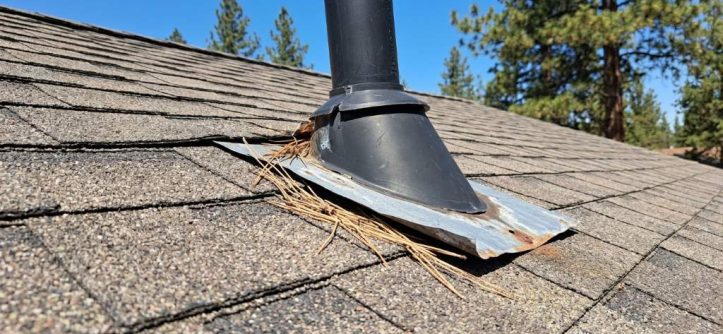
Each component creates a different waterproofing challenge. For example, a plumbing vent needs a correctly integrated boot, while a chimney requires layered flashing around multiple sides.
Even a small fastener can create trouble when someone drives it through a vulnerable area without proper protection. Over time, movement and weather exposure can enlarge that pathway.
How Flashing Failures Turn Small Openings Into Leaks
Flashing creates a controlled path for water around roof penetrations. When installers position or overlap flashing incorrectly, water can move beneath roofing materials instead of flowing safely downslope.
That risk increases when flashing lacks adequate integration with the surrounding underlayment. Proper installation should maintain a continuous water-shedding strategy around the penetration.
Homeowners considering nearby exterior waterproofing can also review cheap balcony waterproofing principles because drainage and layered protection follow similar fundamentals. The key lesson remains simple: water needs a deliberate route away from vulnerable building materials.
Oregon construction standards specifically call for corrosion-resistant flashing at relevant exterior transitions. They also emphasize installation methods that prevent water from reaching structural framing.
Why Sealant Alone Cannot Solve Every Problem
Caulk can provide useful protection, but it should not replace properly designed flashing. Sealants eventually experience aging, movement, adhesion loss, and weather exposure.
Therefore, relying exclusively on exposed sealant creates a maintenance-dependent waterproofing system. A stronger assembly uses physical drainage, compatible materials, flashing, underlayment, and sealant where appropriate.
How Snow, Ice, and Weather Stress Roof Penetrations
Bend’s winter conditions can place additional stress on roof assemblies and penetration details. Ice and snow can introduce prolonged moisture exposure while temperature changes encourage expansion and contraction.
Roofing systems must also manage water after snow melts. If drainage becomes restricted, moisture can remain around vulnerable areas longer than expected.
Oregon roofing specifications recognize ice formation and buildup as a design consideration. They also require roof systems to resist water penetration under demanding weather conditions.
Homeowners adding rooftop features should therefore think beyond the installation day. A penetration must remain watertight after repeated seasonal movement and weather exposure.
Why Rooftop Equipment Requires Extra Attention
Equipment installations often require drilling, fastening, cutting, or modifying existing roofing components. Those actions can disturb established waterproofing layers even when the equipment itself performs correctly.
For example, rooftop decks require careful attention to waterproofing because supporting structures can interact with the roof membrane. Guidance about non permanent rooftop flooring illustrates why temporary-looking installations still deserve careful drainage planning.
Before adding equipment, homeowners should determine whether the installation requires a roof penetration at all. A penetration-free mounting approach may reduce risk when the application and roof structure allow it.
What Happens When Water Gets Past a Roof Penetration?
Water rarely stops exactly where it enters the roof. Instead, gravity can move moisture along underlayment, decking, framing, insulation, and interior finishes.
Consequently, the visible ceiling stain may appear far from the actual penetration. This makes random caulking ineffective when homeowners cannot identify the original entry point.
Oregon’s homeowner guidance lists dampness, staining, mildew, musty odors, and softened wood among potential water-damage indicators. These signs warrant investigation rather than cosmetic repair alone.
Hidden Damage Can Become More Expensive
Persistent moisture can deteriorate roof decking and framing when repairs remain delayed. Insulation and interior finishes can also absorb moisture and require replacement.
Furthermore, concealed moisture can create conditions that support microbial growth. The longer water remains inside the assembly, the greater the chance of secondary damage.
That makes early detection particularly valuable. A small penetration repair can become a much larger restoration project when moisture reaches structural components.
How to Identify a Roof Penetration Leak
Start by examining the ceiling and attic areas beneath suspected penetrations. Look for staining, damp insulation, discolored wood, corrosion, or unusual odors.
Next, inspect the roof surface from a safe location without walking onto steep or hazardous areas. Check visible flashing, boots, sealants, loose materials, and obvious gaps.
However, never assume the nearest penetration represents the leak source. Water can travel horizontally before entering the interior surface.
Warning Signs That Deserve Prompt Attention
- New ceiling stains after rain or snowmelt.
- Water marks surrounding an attic penetration.
- Cracked, separated, or deteriorated sealant.
- Damaged or lifted flashing around roof fixtures.
- Soft or discolored roof decking.
- Musty odors near upper-floor ceilings or attic spaces.
These signs do not always identify the precise entry point. Instead, they indicate that a systematic roof and moisture inspection may be necessary.
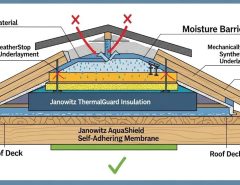
How Proper Moisture Barriers Protect Roof Penetrations
A dependable roof assembly uses multiple layers to control water movement. Roofing materials shed most water, while underlayments and flashing provide additional protection at vulnerable transitions.
Technology and materials continue evolving, but installation quality remains critical. Homeowners researching roofing moisture barrier technology should focus equally on compatibility, detailing, and workmanship.
The best moisture barrier cannot compensate for poorly positioned flashing or an improperly sealed penetration. Every layer must connect logically with the surrounding roof assembly.
What a Proper Penetration Detail Should Accomplish
A well-designed penetration should shed water rather than trap it around the opening. It should also accommodate normal movement without breaking the waterproofing connection.
Materials should remain compatible with the existing roofing system. Installers should follow manufacturer requirements rather than relying on generic installation habits.
Oregon’s current code resources emphasize adopted construction requirements and manufacturer installation instructions for applicable building components.
How Bend Homeowners Can Prevent Penetration-Related Water Damage
Prevention begins before someone creates a new opening in the roof. Evaluate the roof’s condition, remaining service life, drainage, and existing penetration details first.
Whenever possible, choose installation methods that minimize unnecessary roof modifications. If penetration remains necessary, use a qualified professional who understands the complete roofing assembly.
Schedule inspections after severe weather and periodically as part of normal home maintenance. Pay particular attention to older flashing, exposed sealants, damaged boots, and rooftop equipment connections.
A Practical Maintenance Checklist
- Inspect visible flashing for gaps, lifting, corrosion, or damage.
- Check penetration boots for cracking or deterioration.
- Remove debris that can obstruct roof drainage.
- Look for new attic moisture after major storms.
- Document rooftop equipment before and after installation.
- Address minor defects before water reaches the roof deck.
Do not climb onto a roof simply to investigate a suspected leak. Oregon OSHA highlights fall protection as an important consideration for roofing activities.
When Should You Call a Roofing Professional?
Call a professional when you notice recurring leaks, damaged flashing, deteriorated boots, or unexplained interior staining. Professional diagnosis becomes especially important when the visible damage does not reveal the entry point.
A qualified contractor can inspect the penetration, surrounding roofing, underlayment, drainage path, and interior evidence together. This approach reduces the chance of treating symptoms while leaving the actual leak unresolved.
Oregon requires contractors performing construction work for compensation to hold the appropriate Construction Contractors Board license. Homeowners should verify licensing before hiring someone for roofing repairs.
Conclusion: Stop Roof Penetration Leaks Before They Spread
Roof penetrations cause water damage when openings interrupt the roof’s weather barrier and surrounding components fail to shed moisture correctly. In Bend, seasonal weather can expose weaknesses that remain unnoticed during dry periods.
Therefore, treat flashing, boots, sealants, underlayment, and rooftop equipment as one connected waterproofing system. If you see staining or suspect a penetration leak, arrange a professional inspection before hidden moisture causes broader damage.
For the safest result, choose a properly licensed roofing professional, document the affected areas, and address the source rather than covering the symptom. Early action can protect your roof structure, interior finishes, and long-term repair budget.
Frequently Asked Questions
Can a small roof penetration cause major water damage?
Yes, a small opening can allow enough moisture inside to damage insulation, decking, framing, and interior finishes over time.
Which roof penetrations commonly leak?
Plumbing vents, chimneys, skylights, equipment mounts, and poorly sealed fasteners commonly create vulnerable points.
Does replacing sealant fix a roof penetration leak?
Sometimes, but sealant cannot correct underlying flashing, underlayment, drainage, or installation problems.
Can snow and ice make penetration leaks worse?
Yes, prolonged moisture exposure and seasonal movement can increase stress around vulnerable penetration details.
Should I repair a roof penetration myself?
Minor visual maintenance may be possible, but professional diagnosis offers safer and more reliable leak-source identification.