Affordable garage door repair starts with knowing which problems are safe for homeowners to handle. Simple maintenance tasks often cost little and prevent larger repairs. However, spring systems, cable assemblies, and major structural issues require professional attention because they create serious safety risks.
Garage doors move thousands of times throughout their lifespan. Industry estimates show many residential garage doors operate more than 1,500 cycles annually. Additionally, neglected maintenance increases repair costs significantly because small issues often develop into major failures. Understanding what you can safely repair helps reduce expenses while protecting your property and family.
Why Garage Door Repairs Become Expensive
Many homeowners wait until a garage door completely stops working. As a result, minor problems often become complex mechanical failures. Early action usually costs much less than emergency service.
Most garage door systems contain interconnected parts. Therefore, one damaged component often places extra stress on others. A noisy roller today may contribute to track damage later.
Weather also affects garage door performance. Moisture, temperature changes, and debris gradually wear components. Consequently, regular inspections help identify issues before they become costly.
Understanding the Main Garage Door Components
Before attempting repairs, it helps to understand the major parts. This knowledge improves troubleshooting and prevents unnecessary spending.
Key garage door components include:
- Door panels
- Tracks
- Rollers
- Hinges
- Springs
- Cables
- Garage door opener
- Safety sensors
- Weather seals
Each component serves a specific purpose. Therefore, repair decisions should consider both safety and mechanical complexity.
What You Can Safely Fix Yourself
Many garage door issues involve basic maintenance. These tasks require minimal tools and present low safety risks.
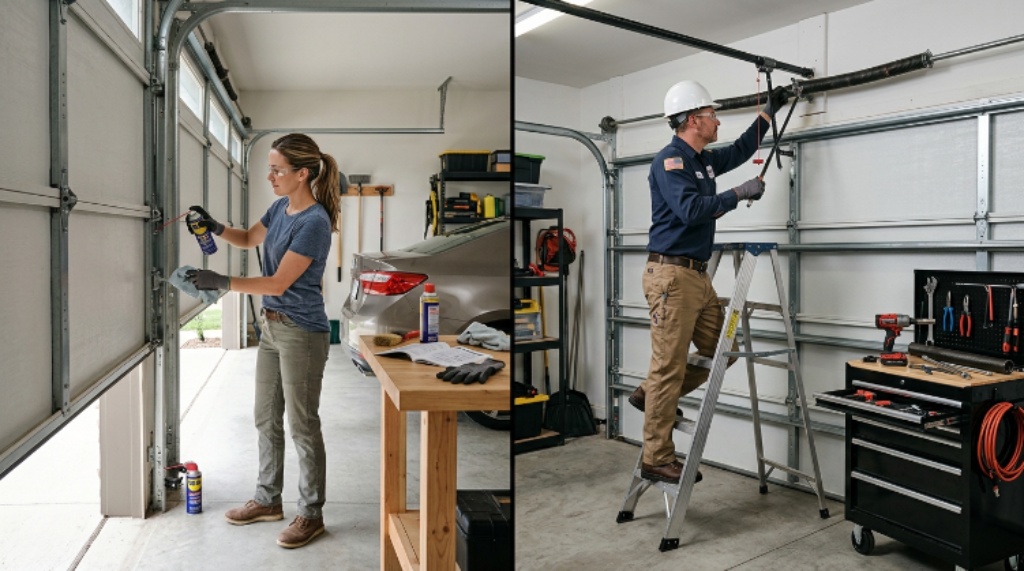
Cleaning and Lubricating Moving Parts
Proper lubrication reduces friction and extends component life. Furthermore, it often eliminates squeaking and grinding noises.
Focus on these areas:
- Rollers
- Hinges
- Bearings
- Springs exterior surfaces
- Lock mechanisms
Use a garage door lubricant instead of general grease. As a result, components move smoothly without attracting excessive dirt.
Inspect moving parts while cleaning. This habit helps identify wear before failures occur.
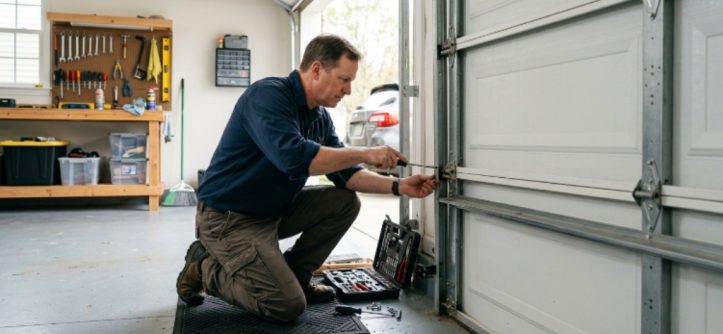
Tightening Loose Hardware
Garage doors create vibration during operation. Consequently, nuts, bolts, and brackets gradually loosen over time.
Inspect visible hardware every few months. Then tighten components that show movement or instability.
Avoid overtightening fasteners. Excessive force can damage brackets and mounting points.
Replacing Weather Stripping
Weather stripping protects the garage from moisture and pests. However, sunlight and weather eventually cause cracking.
Damaged seals increase energy costs and allow water intrusion. Therefore, replacing them provides immediate benefits.
Most weather stripping installs with simple hand tools. Additionally, replacement materials remain relatively inexpensive.
Cleaning Garage Door Tracks
Dirty tracks affect door movement and increase wear. Nevertheless, cleaning tracks differs from adjusting them.
Remove dust, leaves, and debris using a cloth or soft brush. Then inspect for visible obstructions.
Avoid applying lubricant directly inside tracks. Instead, keep track surfaces clean and dry.
Replacing Remote Batteries
A nonresponsive garage door sometimes has a simple cause. Therefore, test remote batteries before assuming major equipment failure.
Fresh batteries restore performance quickly. Moreover, replacement costs remain minimal.
Check wall controls after battery replacement. This step helps identify whether the issue involves the remote or another component.
Aligning Safety Sensors
Modern garage doors use safety sensors near the floor. When misaligned, the door may refuse to close.
Clean sensor lenses carefully. Then confirm both sensors face each other correctly.
Most alignment issues require only minor adjustments. As a result, homeowners can often resolve the problem within minutes.
Warning Signs You Should Never Ignore
Some symptoms indicate growing mechanical problems. Therefore, immediate attention helps avoid larger expenses.
Watch for these warning signs:
- Door jerks during movement
- Loud banging sounds
- Crooked door positioning
- Frayed cables
- Slow operation
- Repeated opener strain
- Door reversing unexpectedly
These issues often signal deeper mechanical concerns. Consequently, delaying repairs usually increases overall costs.
Repairs You Should Never Attempt Yourself
Certain garage door repairs involve substantial risk. Therefore, professional service remains the safest option.
Torsion Spring Replacement
Garage door springs store enormous energy. As a result, improper handling can cause severe injuries.
Spring replacement requires specialized tools and training. Furthermore, incorrect installation affects door balance and performance.
Even experienced homeowners often avoid this repair. Therefore, professional service provides the safest solution.
Cable Repair or Replacement
Garage door cables support significant door weight. When damaged, they can snap unexpectedly.
Cable systems operate under tension. Consequently, replacement procedures involve serious safety hazards.
Attempting cable repairs often creates additional problems. Therefore, professional technicians should handle these components.
Track Realignment and Structural Repairs
Bent tracks affect door movement and stability. However, track repairs involve precise measurements and adjustments.
Improper alignment places stress on rollers and openers. As a result, repair mistakes frequently cause additional damage.
Structural issues also require expert evaluation. Therefore, professional assessment prevents costly errors.
Garage Door Panel Replacement
Individual panel replacement appears straightforward. Nevertheless, matching panel specifications can be challenging.
Improper installation affects balance and appearance. Additionally, some doors require specific manufacturer components.
Professional installation ensures proper fit and performance. Consequently, long term reliability improves significantly.
Opener Motor Repairs
Garage door openers contain electrical and mechanical systems. Therefore, diagnosing failures often requires technical expertise.
Incorrect repairs may damage internal components. Moreover, electrical hazards increase safety concerns.
Professional troubleshooting identifies root causes efficiently. As a result, repair costs often remain lower than repeated trial and error attempts.
Smart Ways to Save Money on Garage Door Repairs
Affordable repairs depend on prevention and informed decisions. Fortunately, several strategies reduce long term expenses.
Schedule Basic Maintenance
Routine maintenance costs far less than emergency repairs. Furthermore, it extends the lifespan of major components.
Create a simple maintenance schedule:
- Monthly visual inspection
- Quarterly lubrication
- Sensor cleaning every season
- Annual professional inspection
This approach catches problems early. Consequently, repair bills often remain manageable.
Address Small Problems Immediately
Many homeowners ignore unusual noises. However, these sounds often indicate developing mechanical issues.
Early intervention prevents secondary damage. Therefore, small repairs rarely become expensive projects.
Even a loose bracket deserves attention. Small fixes today often prevent major repairs tomorrow.
Compare Repair Quotes Carefully
Not every repair estimate reflects equal value. Therefore, compare service details rather than focusing solely on price.
Ask about:
- Labor warranty
- Parts warranty
- Repair scope
- Technician experience
- Additional fees
A slightly higher quote sometimes provides better long term savings. Consequently, evaluating total value matters more than choosing the lowest price.
Replace Parts Instead of Entire Systems When Appropriate
Some companies recommend full replacements too quickly. However, many garage door systems remain repairable.
Ask whether individual components can be replaced. Then compare repair costs against replacement expenses.
When the door remains structurally sound, targeted repairs often provide excellent value.
Invest in Quality Components
Cheap replacement parts may fail prematurely. Therefore, low initial costs sometimes create higher long term expenses.
Quality rollers, hinges, and seals typically last longer. Additionally, they often improve overall system performance.
A modest investment today may reduce future repair frequency significantly.
When Replacement Makes More Sense Than Repair
Not every garage door should be repaired indefinitely. Eventually, replacement becomes the smarter financial decision.
Consider replacement when:
- Multiple major components fail simultaneously
- Repair costs approach replacement costs
- Door panels suffer extensive damage
- Safety features remain outdated
- Frequent repairs continue occurring
A newer system often improves reliability and energy efficiency. Therefore, replacement sometimes delivers better overall value.
Creating a Garage Door Maintenance Habit
Consistent maintenance remains the most effective cost saving strategy. Furthermore, it reduces unexpected breakdowns.
Spend a few minutes each month inspecting visible components. Listen for unusual sounds and watch door movement carefully.
Record repairs and maintenance activities. This habit helps identify recurring issues and supports smarter repair decisions.
Conclusion
Affordable garage door repair depends on understanding the difference between safe maintenance and dangerous repairs. Homeowners can confidently handle cleaning, lubrication, weather stripping replacement, sensor adjustments, and basic inspections. However, springs, cables, structural repairs, and major mechanical work should always remain in professional hands.
Start with preventive maintenance today, address minor problems quickly, and seek expert help when safety risks appear. These simple habits can save substantial money while keeping your garage door reliable for years.
FAQs
Can I repair a noisy garage door myself?
Yes, cleaning and lubricating moving parts often resolves common garage door noises.
Is it safe to replace garage door springs?
No, spring replacement involves dangerous tension and requires professional expertise.
How often should garage door maintenance be performed?
A basic inspection every month and lubrication every few months works well.
Why does my garage door reverse before closing?
Misaligned safety sensors or obstructions commonly cause this behavior.
When should I replace instead of repair a garage door?
Replacement becomes worthwhile when repair costs approach the value of a new system.