Key Takeaways
- Bagged vacuums trap dust inside a sealed bag that acts as a filter.
- Bagless vacuums rely on filters and a plastic bin to capture debris.
- Emptying a bagless bin can release a cloud of fine dust.
- HEPA filters improve results in both vacuum types.
- Your allergies, budget, and habits should guide your final choice.
Choosing a vacuum sounds simple until you compare filtration systems. However, the bag question affects air quality, upkeep, and long-term cost. Bagged and bagless models trap dust in very different ways. This guide explains how each system works. You will pick the right vacuum for your home with confidence.
How Vacuum Filtration Works
Every vacuum pulls dirty air through the machine and then cleans it. The cleaned air leaves through an exhaust port. Therefore, filtration decides how much dust returns to your room.
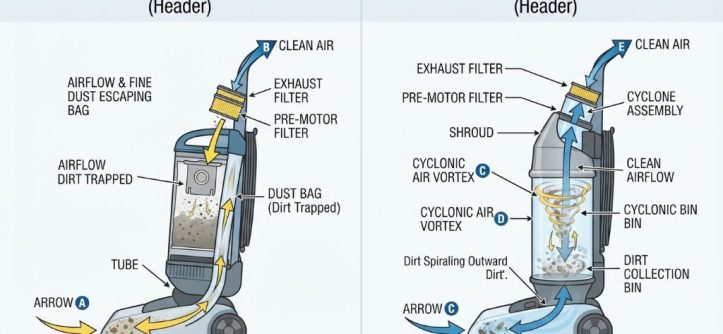
Filtration happens in stages. First, a bag or a bin collects large debris. Next, one or more filters catch smaller particles. Finally, many models add a last filter before the exhaust. Each stage removes finer dust from the airflow.
Particle size matters a great deal here. Pollen, pet dander, and dust mite waste are extremely small. As a result, a basic filter may let them slip through. Fine particles then settle back onto your floors and furniture.
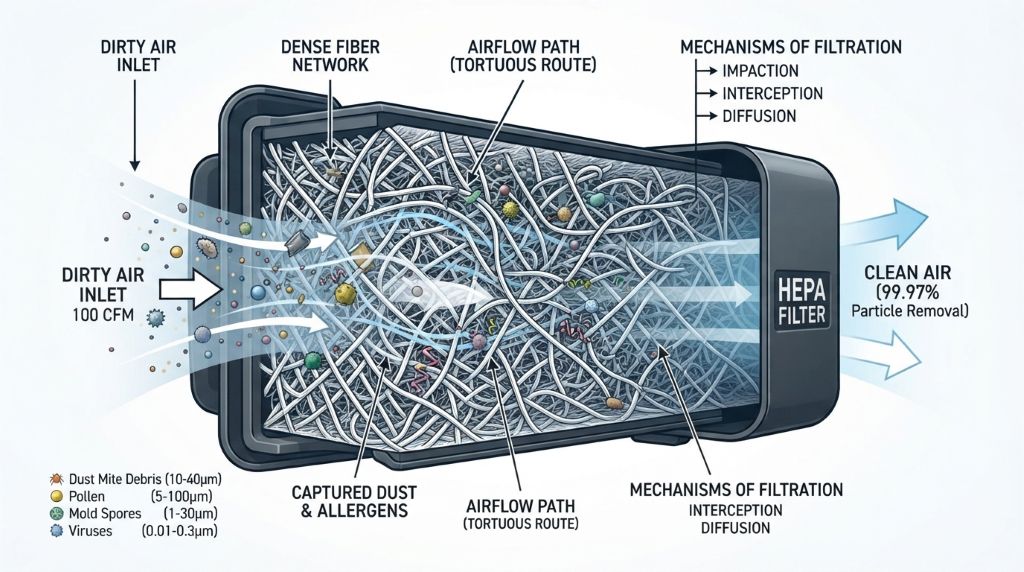
HEPA filters solve much of this problem. The term HEPA stands for high-efficiency particulate air. By the standard used in the United States, a true HEPA filter captures 99.97 percent of particles at 0.3 microns. This size is among the hardest to trap. Therefore, a true HEPA filter offers strong protection for allergy sufferers.
However, not every filter labeled as HEPA-type meets that standard. Always check the product details before buying. A vacuum with true HEPA filtration and a sealed body works best. Air must pass through the filter instead of leaking around it.
How Bagged Vacuums Filter Air
Bagged vacuums send all collected debris into a disposable bag. This bag does more than store dirt. It also serves as the first and most important filter.
The bag material has tiny pores. Air passes through them, but dust stays inside. According to Homes and Gardens, the tight seal of a vacuum bag adds another layer of filtration. This design keeps fine particles away from the motor and exhaust.
Bagged models usually include extra filters as well. A motor filter protects the machine itself. Meanwhile, many models add a HEPA filter at the exhaust. This layered setup gives bagged vacuums a strong reputation for clean air.
Disposal is another major advantage. You remove the full bag and throw it away. Some bags even seal themselves as you pull them out. Rocky Mountain Sewing notes that certain Miele bags close automatically when removed. Consequently, you barely touch the dust at all.
There are some drawbacks, though. You must buy replacement bags regularly. Additionally, bag quality varies between brands. Cheap or poorly fitted bags can tear or leak. Always use bags made for your specific model.
Suction also stays steadier in many bagged designs. The bag holds a large amount of debris before it clogs. Nilfisk points out that most bags have higher capacity than bagless bins. Therefore, you empty them less often.
How Bagless Vacuums Filter Air
Bagless vacuums collect debris in a clear plastic bin. Most use cyclonic action to spin dust out of the air. The heavy dirt drops into the bin. Meanwhile, the lighter dust moves on toward the filters.
Filters do the main cleaning work in these machines. A pre-motor filter catches fine dust first. Then a post-motor or HEPA filter cleans the exhaust air. Many bagless models perform well with a quality filter setup.
According to Ecovacs, bagless vacuums can filter effectively with a high-quality system. However, performance may drop when filters get dirty or clogged. Therefore, filter care matters more for bagless models. Skipping it lowers both suction and air quality.
Bagless designs offer clear benefits too. You can see when the bin is full. Additionally, you avoid the ongoing cost of bags. Most filters are washable or need replacing only occasionally. These features make bagless vacuums popular with budget-minded shoppers.
The main weakness appears during emptying. RTINGS warns that allergy sufferers should expect a cloud of dust when emptying a bagless model. Fine particles can escape into the air as you tip the bin. Emptying it outdoors or into a sealed trash bag helps reduce this problem.
Key Filtration Differences at a Glance
Now compare the two systems side by side. This list shows where each type stands out.
- Dust containment: Bagged models seal debris inside a closed bag.
- Emptying: Bagged models release less dust than bagless bins.
- Filter upkeep: Bagless models need more frequent filter cleaning.
- Suction: Bagged models often hold steadier suction as they fill.
- Ongoing cost: Bagless models avoid the cost of replacement bags.
- Visibility: Bagless bins show you exactly when to empty.
Dust containment shows the clearest gap. A bag keeps fine particles trapped from start to finish. In contrast, a bin exposes dust at the moment you empty it. This difference matters most for people with asthma or allergies.
Filter upkeep favors bagged models as well. Because the bag catches most dust first, the filters stay cleaner longer. Nilfisk notes that bagless models need filter changes more often. As a result, bagless ownership takes slightly more effort.
Cost, however, favors bagless designs. Bags add up over the years. Even so, some bagless models need new filters regularly. Therefore, compare the full yearly cost before you decide.
Keep in mind that many of these comparisons come from vacuum makers and sellers. Independent testing sites such as RTINGS provide a useful balance. Read several sources before you buy.
Choosing the Right Vacuum for Your Home
The best choice depends on your household. Use these questions to guide your decision.
- Does anyone in your home have allergies or asthma?
- Do you have pets that shed heavily?
- Do you mind buying replacement bags each year?
- Will you clean and replace filters on schedule?
- Do you want to see the debris you collect?
Allergy sufferers should lean toward bagged models. The sealed bag limits exposure during disposal. Additionally, most bagged vacuums include strong HEPA filtration. This pairing offers the cleanest results for sensitive households.
Pet owners face a mixed situation. Bagged vacuums hold fur and dander neatly. However, bagless models make it easy to see and remove clumps. Therefore, either type can work well with regular care.
Budget shoppers often prefer bagless models. You avoid bag costs and gain a simple emptying routine. If you choose this route, pick a model with a washable HEPA filter. Also, empty the bin outdoors whenever possible.
Whichever type you buy, look for a sealed system. Gaps in the body let dirty air escape. As a result, even a great filter loses its value. A sealed design keeps captured dust where it belongs.
Conclusion
Bagged and bagless vacuums both clean well, but their filtration differs. Bagged models trap dust in a sealed bag and release less of it during disposal. Bagless models depend on filters and need more upkeep. However, they save money and show you what you collect. When comparing these options, it also helps to consider factors such as size, weight, and maneuverability if you plan to choose the best cheap vacuum for stairs in small homes, where compact and easy-to-handle designs can make cleaning much easier.
Match your choice to your health needs, budget, and cleaning habits. Choose a bagged model with true HEPA filtration if allergies matter most. Choose a bagless model with a washable filter if cost and convenience come first. Check the filter details today, and then pick the vacuum that keeps your home cleaner.
Frequently Asked Questions
Are bagged vacuums better for allergies?
Generally, yes. Sealed bags release far less dust during disposal than bagless bins do.
Do bagless vacuums lose suction over time?
They can when filters clog or the bin overfills. Regular filter cleaning keeps suction strong.
Do bagless vacuums use HEPA filters?
Many do, but not all. Check that the filter is true HEPA and the body is sealed.
Which vacuum type costs less to own?
Bagless models usually cost less because they skip bags. Some still need periodic filter replacements.
How often should I replace a vacuum bag?
Replace it when it is about two-thirds full. Also change it if suction drops or odors appear.