
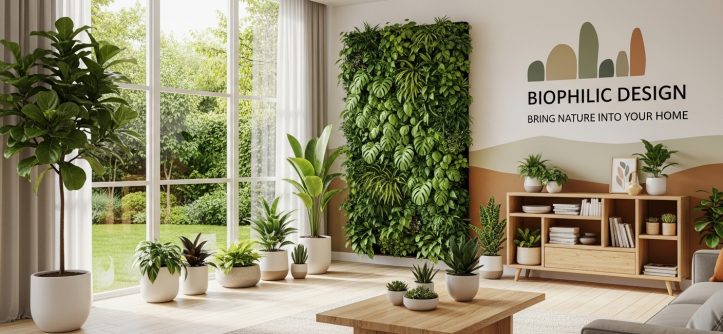
Modern homes are more comfortable than ever. Yet many people feel tired, distracted, and disconnected indoors. Screens dominate attention. Artificial lighting replaces daylight. Air circulation is poor. Stress increases without obvious reasons.
What Is Biophilic Design?
Snippet Answer: Biophilic design is a home design approach that reconnects people with nature through natural light, plants, airflow, textures, organic shapes, and outdoor views. It improves mental health, productivity, and comfort by integrating nature-inspired elements into indoor environments without requiring major renovations or expensive structural changes.
Answer Block: Biophilic design integrates natural elements like sunlight, plants, airflow, water features, and organic materials into indoor environments. It strengthens the connection between humans and nature, improving mental wellbeing, reducing stress, enhancing focus, and creating healthier living spaces using intentional architectural and decorative strategies.
Biophilic design is based on a simple principle. Humans evolved in nature, not enclosed environments. When indoor spaces remove natural stimuli, the brain experiences fatigue.
This design approach restores those missing elements intentionally.
Instead of decoration alone, it combines:
- Natural materials
- Daylight exposure
- Greenery integration
- Outdoor visibility
- Organic spatial layouts
Research consistently shows that nature-connected environments reduce cortisol levels. They also improve concentration and sleep patterns.
In 2026, biophilic interiors are no longer luxury concepts. They are practical strategies used in apartments, small homes, and urban residences worldwide.
Why Is Biophilic Design Important for Modern Homes in 2026?
Answer Block: Biophilic design is important because modern indoor lifestyles reduce exposure to natural light, fresh air, and greenery. Integrating natural elements improves mood, lowers stress, enhances productivity, and supports healthier sleep patterns, making homes more comfortable and psychologically supportive environments.
Urban living limits daily exposure to natural environments.
People spend over 85% of their time indoors. Artificial lighting replaces sunlight. Air conditioning replaces ventilation. Screens replace outdoor movement.
This creates three major problems:
- Mental fatigue increases
- Sleep quality decreases
- Productivity drops
Biophilic design directly addresses these issues by reintroducing environmental balance.
Studies show homes with natural light and indoor plants improve:
- Focus by up to 15%
- Sleep consistency
- Stress recovery speed
- Emotional stability
That is why architects and interior designers now treat nature integration as a functional necessity rather than decoration.
What Are the Core Elements of Biophilic Interior Design?
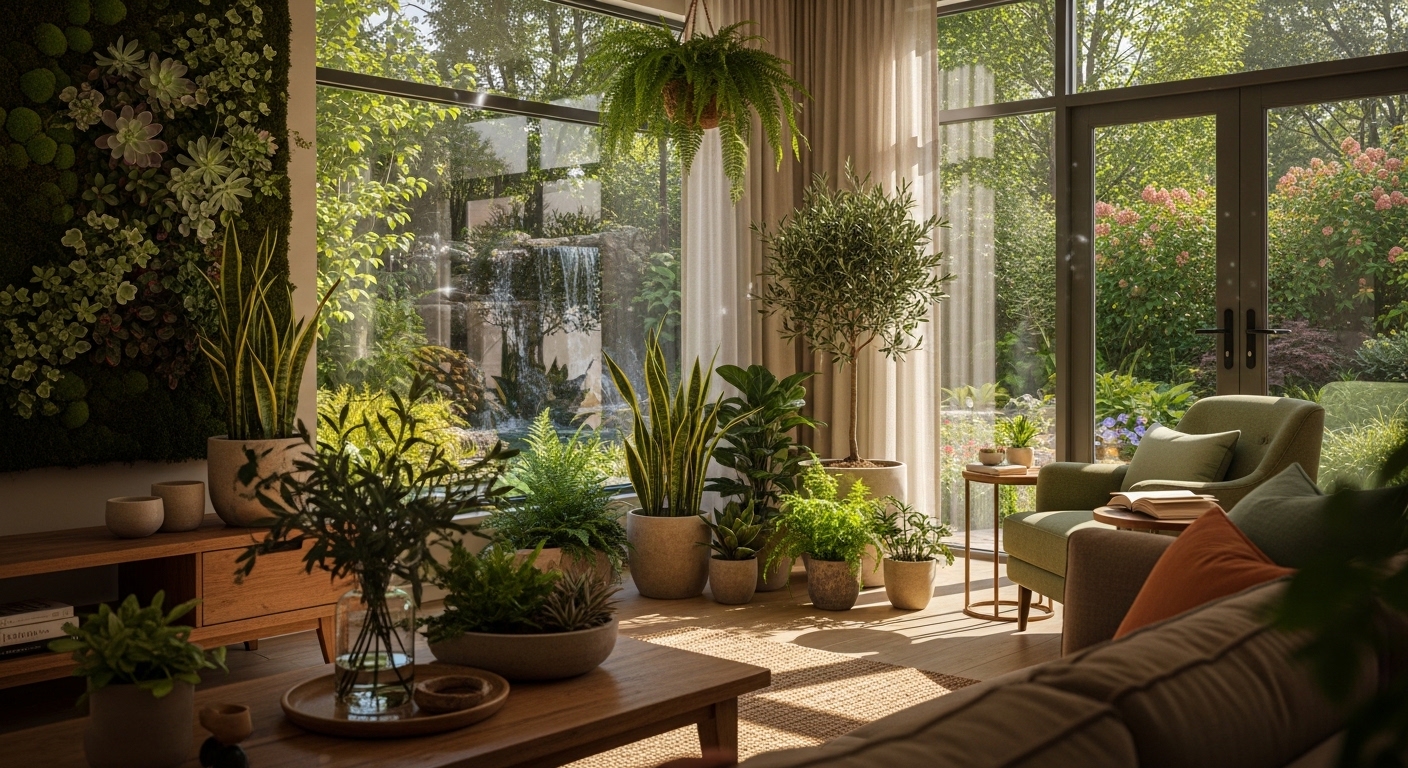
Answer Block: Core biophilic design elements include natural light, indoor plants, airflow, organic materials, water features, outdoor views, and nature-inspired textures. Together, these components recreate environmental conditions similar to outdoor settings, improving comfort, wellbeing, and sensory balance inside modern homes.
Biophilic interiors rely on combining multiple natural signals instead of using plants alone.
The most effective elements include:
- Sunlight exposure
- Indoor greenery
- Natural wood surfaces
- Stone textures
- Air circulation
- Soft organic shapes
- Water presence
Each element stimulates different senses.
For example:
- Light supports circadian rhythm
- Plants improve air freshness perception
- Wood creates warmth
- Stone introduces grounding textures
The goal is not decoration density. The goal is environmental balance.
Even small adjustments like moving furniture closer to windows can increase exposure to natural light significantly.
How Can You Add Biophilic Design to a Small Apartment?
Answer Block: You can add biophilic design to small apartments by maximizing natural light, placing indoor plants strategically, using natural materials like wood and linen, improving airflow, and introducing nature-inspired colors and textures without requiring structural renovations or large furniture changes.
Many people assume biophilic design requires large homes.
That assumption is incorrect.
Small apartments benefit the most from nature integration.
Start with these practical upgrades:
- Place mirrors opposite windows
- Add vertical plant shelves
- Replace synthetic curtains with linen
- Use warm wooden surfaces
- Keep window areas uncluttered
Vertical greenery works especially well in compact homes.
Hanging plants near corners increases perceived ceiling height while improving visual softness.
Even a single indoor tree near a window can transform spatial experience.
Layering natural textures across multiple surfaces creates stronger psychological effects than placing many decorative objects randomly.
Which Natural Materials Work Best in Biophilic Interiors?
Answer Block: The best materials for biophilic interiors include wood, bamboo, stone, clay, linen, cotton, wool, and rattan. These materials create tactile warmth, visual softness, and environmental authenticity that strengthen indoor connections with nature while improving comfort and sustainability.
Material selection plays a major role in sensory comfort.
Synthetic finishes reflect light differently from natural surfaces. They often feel colder visually.
Natural materials absorb light softly.
They create calmer environments.
| Material | Best Use Area | Primary Benefit |
|---|---|---|
| Wood | Floors, furniture | Warmth and grounding |
| Stone | Walls, countertops | Durability and texture |
| Linen | Curtains, upholstery | Airflow and softness |
| Rattan | Chairs, lighting | Lightweight natural pattern |
| Bamboo | Decor panels | Sustainability |
Combining multiple natural materials produces stronger results than relying on one surface type.
Layering textures increases environmental depth.
How Do Indoor Plants Improve Biophilic Design Results?
Answer Block: Indoor plants improve biophilic design by increasing humidity balance perception, reducing stress responses, enhancing visual comfort, and strengthening emotional connections with natural environments. Strategic plant placement near windows, corners, and workspaces maximizes psychological and aesthetic benefits indoors.
Plants influence more than decoration.
They affect perception of air freshness and spatial comfort.
Research shows indoor greenery improves recovery from mental fatigue faster than artificial décor.
Best placement strategies include:
- Near study desks
- Beside windows
- Room corners
- Entryways
Large-leaf plants create stronger visual impact.
Examples include:
- Fiddle leaf fig
- Areca palm
- Rubber plant
- Snake plant
Even three plants placed across different height levels improve perceived comfort significantly.
What Colors Support Biophilic Home Design?
Answer Block: Biophilic color palettes include earth tones, soft greens, warm browns, muted blues, and natural neutrals. These colors replicate outdoor landscapes and help regulate visual stress levels while improving emotional calmness and spatial harmony inside residential environments.
Color influences mood faster than furniture layout.
Nature-based palettes support relaxation automatically.
Recommended tones include:
- Olive green
- Clay beige
- Forest brown
- Sand tones
- Muted sky blue
Avoid overly bright artificial colors across large surfaces.
Instead, apply natural tones on:
- Walls
- Cushions
- Rugs
- Curtains
Balanced color layering strengthens environmental consistency.
What Are the Biggest Biophilic Design Trends in 2026?
Answer Block: Major 2026 biophilic design trends include indoor trees, daylight-maximizing layouts, natural ventilation planning, textured organic walls, multifunctional green corners, and sustainable materials. These trends prioritize wellbeing-focused interiors that combine environmental comfort with modern aesthetics.
Biophilic design continues evolving.
Recent trends focus on functional nature integration rather than decorative greenery alone.
Key 2026 trends include:
- Indoor micro-gardens
- Living wall panels
- Stone accent walls
- Natural fiber lighting fixtures
- Sunlight zoning layouts
Designers now prioritize daylight flow before furniture placement.
This improves spatial efficiency while supporting circadian rhythm regulation.
Sustainability also plays a central role.
Homeowners increasingly choose renewable materials over synthetic finishes.
Conclusion: How Can You Start Using Biophilic Design Today?
Biophilic design solves one major modern problem. Homes feel comfortable but disconnected from nature.
Simple adjustments restore that connection quickly.
You do not need expensive renovations.
Start with three actions:
- Increase daylight exposure
- Add layered greenery
- Replace synthetic textures with natural materials
These changes improve mood, focus, and relaxation almost immediately.
As biophilic interiors become standard in 2026, early adoption helps create healthier living environments with minimal cost.
If you want your home to feel calmer, brighter, and more energizing, begin by introducing one natural element per room this week.
Frequently Asked Questions About Biophilic Design
Is biophilic design expensive to implement?
No. Many biophilic improvements involve rearranging furniture, adding plants, improving lighting access, or replacing synthetic textiles with natural fabrics rather than structural renovations.
Does biophilic design work in rental apartments?
Yes. Portable plants, removable wallpaper, natural rugs, and furniture placement changes allow renters to apply biophilic design without permanent alterations.
Which room benefits most from biophilic design?
Living rooms benefit most because they receive the highest daily usage, but bedrooms also show strong improvements in sleep quality after natural lighting adjustments.
How many plants are needed for biophilic interiors?
Three to five plants per room usually create noticeable psychological benefits when placed at different heights and near natural light sources.
Is biophilic design suitable for small homes?
Yes. Small homes benefit significantly from vertical greenery, mirrors that increase daylight distribution, and natural textures that improve perceived openness.
Can artificial plants replace real plants?
Artificial plants improve visual softness but do not provide the psychological benefits associated with living greenery and environmental interaction.
What is the difference between eco design and biophilic design?
Eco design focuses on sustainability and environmental impact, while biophilic design focuses on improving human wellbeing through stronger connections with natural environments indoors.
Read More Set Up a Home Recycling Station
Find out: Top tips for a safer trailer experience