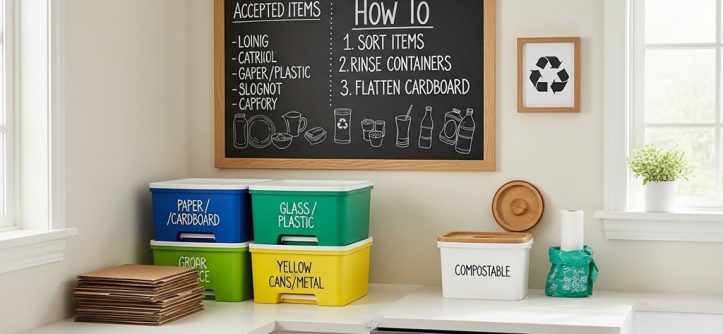
Learning how to set up a home recycling station is one of the simplest ways to reduce household waste and support sustainable living. A home recycling station is a designated area where you sort recyclable materials like paper, plastic, metal, and glass before sending them to recycling facilities.
Most households generate more waste than they realize. According to the World Bank’s Global Waste Management Outlook, the world produces over 2.24 billion tons of municipal solid waste each year. Yet only about 19% is recycled or composted globally. This means much of the recyclable material still ends up in landfills.
The problem often starts at home. Many families want to recycle but struggle with clutter, confusion about sorting, or lack of space. Without a simple system, recyclable materials quickly mix with regular trash.
This is where a home recycling station becomes useful.
By creating a clear sorting system inside your home, you make recycling faster, easier, and more consistent. Instead of guessing what goes where, every item has a place. This small change can significantly reduce landfill waste and improve recycling efficiency.
In this guide, you will learn exactly how to set up a home recycling station step by step. We will cover bin selection, space planning, labeling, waste sorting, and real-world examples to help you build a system that works.
How Do You Set Up a Home Recycling Station?

Short answer: To set up a home recycling station, choose a convenient location, use labeled bins for different materials, follow local recycling guidelines, and maintain a simple sorting routine.
Now let’s break the process into practical steps.
Step 1: Choose the Right Location for Your Recycling Station
The first step in setting up a home recycling system is selecting the right place. If the station is inconvenient, people will stop using it.
Common locations include:
- Kitchen corner
- Garage wall
- Laundry room
- Pantry space
- Balcony or utility area
The kitchen is often the best choice because most household waste originates there. Food packaging, plastic containers, aluminum cans, and cardboard boxes are frequently discarded during cooking or meal preparation.
A case study from the Environmental Protection Agency (EPA) showed that households with visible recycling bins in kitchens recycled up to 35% more materials than homes where recycling containers were stored outside or in garages.
Visibility encourages consistent use.
Step 2: What Bins Do You Need for a Home Recycling Station?
Short answer: A basic home recycling station needs separate bins for paper, plastic, glass, metal, and general waste.
Different municipalities accept different recyclable materials, so check local guidelines first.
| Material | Examples | Common Bin Color |
|---|---|---|
| Paper | Newspapers, cardboard, mail | Blue |
| Plastic | Bottles, containers | Yellow |
| Glass | Bottles, jars | Green |
| Metal | Aluminum cans, tins | Gray |
| General Waste | Non-recyclable items | Black |
For small homes or apartments, you can combine certain materials into one recycling bin if local facilities allow mixed recycling.
Stackable bins or pull-out cabinet containers are also popular space-saving options.
Step 3: How Do You Label a Recycling Station Correctly?
Short answer: Clear labels help household members quickly identify where each item belongs.
Labels reduce confusion and prevent contamination. Contamination occurs when non-recyclable items mix with recyclables, which can cause entire batches to be rejected.
According to recycling industry data, contamination rates in household recycling bins average around 17–25%.
You can label bins using:
- Printed icons
- Color-coded stickers
- Laminated sorting guides
- Simple text labels
For example:
- Paper Only
- Plastic Bottles
- Glass Containers
- Aluminum Cans
Visual icons are particularly useful for children or guests who may not know your sorting system.
Step 4: What Items Should Go Into Each Recycling Bin?
Short answer: Each bin should contain clean, dry materials accepted by your local recycling program.
Here is a simple sorting guide:
Paper Recycling
- Newspapers
- Office paper
- Cardboard boxes
- Magazines
Avoid:
- Greasy pizza boxes
- Wax-coated paper
Plastic Recycling
- Water bottles
- Food containers
- Shampoo bottles
Avoid:
- Plastic bags
- Styrofoam
- Plastic cutlery
Glass Recycling
- Glass jars
- Beverage bottles
Avoid:
- Window glass
- Ceramics
- Light bulbs
Metal Recycling
- Aluminum cans
- Steel food tins
- Metal lids
Always rinse containers before recycling them.
This prevents odors and reduces contamination.
Step 5: How Do You Organize a Recycling Station in a Small Home?
Short answer: Use vertical storage, stackable bins, and cabinet systems to save space.
Small apartments can still support effective recycling systems.
Popular space-saving solutions include:
- Stackable recycling bins
- Sliding cabinet containers
- Wall-mounted sorting bags
- Under-sink recycling baskets
A study by the Urban Sustainability Lab found that households using stackable recycling containers increased recycling participation by 22% compared with single-bin systems.
Compact systems reduce clutter while maintaining separation of materials.
Step 6: How Do You Maintain a Home Recycling System?
Short answer: Regular emptying, cleaning bins, and educating household members keeps the system working.
Maintenance prevents recycling stations from turning into messy storage areas.
Follow these habits:
- Empty bins weekly
- Rinse containers before sorting
- Flatten cardboard boxes
- Keep lids closed
Cleaning bins every two weeks helps prevent odors and pests.
Consistency is the key to long-term recycling success.
Step 7: What Are Common Mistakes When Setting Up a Home Recycling Station?
Short answer: The most common mistakes include unclear labels, poor location, and mixing non-recyclable items.
Here are mistakes to avoid:
- Placing recycling bins too far from daily activities
- Using identical bins without labels
- Not following local recycling rules
- Throwing dirty containers into bins
- Overloading recycling bags
These issues increase contamination and may cause recycling collectors to reject the materials.
Step 8: How Much Waste Can a Home Recycling Station Reduce?
Short answer: A well-managed home recycling system can reduce household landfill waste by 40–60%.
According to data from the European Environment Agency, households that actively separate recyclable materials significantly reduce landfill dependency.
Here is an example household breakdown:
| Waste Type | Average Share |
|---|---|
| Recyclables | 45% |
| Organic Waste | 30% |
| Non-Recyclable Waste | 25% |
This means nearly half of typical household waste can be diverted through recycling.
When combined with composting, waste reduction can increase even further.
Step 9: Can Kids and Families Participate in Home Recycling?
Short answer: Yes. Involving family members improves recycling habits and environmental awareness.
Simple methods include:
- Assigning each child a recycling category
- Using colorful labels
- Turning sorting into a weekly routine
Environmental education research shows children who participate in recycling activities at home are more likely to continue sustainable habits as adults.
A recycling station can become both a practical system and a learning tool.
Conclusion: Why Every Home Should Have a Recycling Station
Setting up a recycling station at home does not require expensive equipment or complicated systems. It simply requires organization, awareness, and consistency.
By learning how to set up a home recycling station, you create a structured way to manage household waste. Clear bins, simple labels, and an accessible location make recycling easier for everyone in the household.
The environmental impact is real. Recycling conserves natural resources, reduces landfill waste, and lowers energy consumption. For example, recycling aluminum saves up to 95% of the energy required to produce new aluminum from raw materials.
Small actions at home scale into large environmental benefits when practiced consistently.
If you have not created a recycling system yet, today is a great time to start.
Choose a location, set up labeled bins, and begin sorting your household waste.
Your home recycling station can become a simple daily habit that supports a cleaner environment.
Frequently Asked Questions About Home Recycling Stations
How many bins are needed for a home recycling station?
Most homes need three to five bins: paper, plastic, glass, metal, and general waste. However, some cities allow mixed recycling, which means fewer bins may be required.
Where should a recycling station be placed in a house?
The best place for a recycling station is near the kitchen since most household waste is generated there. Other good locations include the garage, pantry, or laundry room.
Do recyclable items need to be washed?
Yes. Containers should be rinsed to remove food residue. Clean materials prevent contamination and improve recycling efficiency.
Can plastic bags be recycled at home recycling stations?
Most curbside recycling programs do not accept plastic bags. These usually require special drop-off recycling points at grocery stores or collection centers.
What happens if recycling is mixed with regular trash?
If recyclables are mixed with non-recyclable waste, the entire batch may be rejected at sorting facilities and sent to landfills instead.
How often should recycling bins be emptied?
Recycling bins should be emptied once a week or according to local collection schedules. Regular emptying prevents overflow and odors.
Is a home recycling station worth it?
Yes. A home recycling station simplifies waste sorting, increases recycling participation, and helps households reduce landfill waste significantly.
Read More Also: Damage Caused By Cracked Grout
Find out: What Coaching Looks Like for Women in Business