Protecting your home from water damage starts at the top. Your roof serves as the first line of defense against rain, snow, and moisture infiltration. However, traditional roofing materials alone cannot always prevent water from seeping through vulnerable areas. This is where advanced moisture barrier technology becomes essential for long-term roof performance.
Janowitz roofing moisture barrier technology represents a significant advancement in residential and commercial roofing protection. Understanding how these systems work can help property owners make informed decisions about their roofing investments. Additionally, knowing the benefits and installation process ensures you get the most value from your roofing project.
What Is Moisture Barrier Technology?
Moisture barrier technology involves specialized materials designed to prevent water penetration through your roof system. These barriers create an impenetrable layer between your roof deck and the external roofing materials. Therefore, even if water manages to bypass shingles or tiles, the barrier prevents it from reaching the interior structure.
Modern moisture barriers consist of synthetic materials that resist water while allowing vapor to escape. This breathability prevents condensation buildup that could lead to mold growth or wood rot. Consequently, your roof structure remains dry and intact for decades.
The technology has evolved significantly over the past few decades. Early moisture barriers were simple felt paper that degraded quickly. However, today’s advanced barriers use polymer-modified materials that withstand extreme weather conditions and temperature fluctuations.
How Janowitz Roofing Moisture Barriers Work
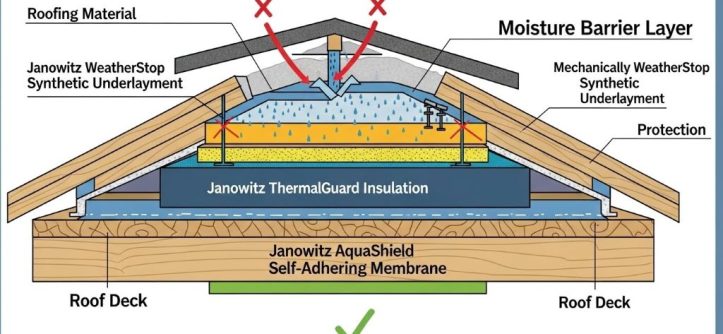
Janowitz roofing systems incorporate multiple layers of protection to create a comprehensive moisture management solution. The primary barrier consists of a high-performance underlayment installed directly onto the roof deck. This underlayment features a specially engineered surface that repels water on contact.
Furthermore, the barrier includes self-sealing properties around nail penetrations. When fasteners pierce through during shingle installation, the material seals around each nail to prevent leakage. This self-healing characteristic sets Janowitz technology apart from conventional barriers.
The system also incorporates strategic overlap zones where barrier sheets meet. These overlaps are sealed with specialized adhesive strips that create watertight bonds. Therefore, water cannot find entry points between barrier sections even during heavy storms.
Key Components of the System
Advanced Underlayment Materials
The foundation of Janowitz moisture barrier technology is its premium underlayment. This material combines synthetic fibers with waterproof polymers to create a lightweight yet durable barrier. The underlayment remains flexible in cold temperatures while resisting degradation from UV exposure.
Self-Adhering Membranes
Critical areas such as valleys, eaves, and penetrations receive additional protection from self-adhering membranes. These sticky-back barriers bond directly to the roof deck without requiring fasteners. Consequently, they eliminate potential leak points that nails or staples would create.
Breathable Technology
Unlike older barriers that trapped moisture inside, Janowitz systems allow water vapor to escape from beneath. This breathability prevents condensation accumulation that leads to structural damage. Meanwhile, liquid water cannot penetrate from above, providing the best of both worlds.
Benefits for Homeowners
Installing Janowitz moisture barrier technology offers numerous advantages beyond basic water protection. First, these systems significantly extend your roof’s lifespan by preventing premature deterioration. According to the National Roofing Contractors Association, proper moisture management is essential for maximizing roof longevity.
Additionally, moisture barriers improve energy efficiency by reducing air leakage through the roof deck. This creates better insulation performance and lower heating and cooling costs. Homeowners typically notice reduced utility bills within the first year of installation.
The technology also provides ice dam protection in cold climates. Ice dams form when melting snow refreezes at roof edges, forcing water under shingles. However, the waterproof barrier prevents this water from entering your home even when ice dams develop.
Moreover, homes with advanced moisture barriers often qualify for better insurance rates. Insurance companies recognize that superior water protection reduces claim risks. Therefore, you may receive premium discounts after installation.
Installation Process and Considerations
Proper installation is crucial for moisture barrier effectiveness. Professional roofers begin by ensuring the roof deck is clean, dry, and structurally sound. Any damaged decking must be replaced before barrier installation begins.
The underlayment is then rolled out starting from the eaves and working upward. Each row overlaps the previous one by at least six inches to prevent water infiltration. Furthermore, all seams receive specialized tape to create continuous protection.
Self-adhering membranes are installed in vulnerable areas before the main underlayment. These include valleys where two roof planes meet, around chimneys, and along eaves. The sticky backing ensures these critical zones have maximum protection.
Finally, roofing materials are installed over the completed barrier system. The barrier remains hidden but constantly protects your home from moisture damage. Professional installation typically takes one to two days for average-sized residential roofs.

Maintenance and Longevity
One significant advantage of Janowitz moisture barrier technology is its minimal maintenance requirements. Once installed, the barrier works continuously without needing attention. However, regular roof inspections help identify potential issues before they become problems.
Property owners should have their roofs professionally inspected every three to five years. Inspectors check for damaged shingles, clogged gutters, and other issues that could compromise the barrier. Additionally, prompt repairs of visible roof damage prevent water from testing the barrier’s limits.
The barrier itself typically lasts as long as your roof covering. Most manufacturers warranty their moisture barriers for 30 to 50 years. Therefore, when you install a new roof with Janowitz technology, you gain decades of reliable protection.
Cost Considerations and Value
Investing in advanced moisture barrier technology does increase initial roofing costs. Homeowners typically pay 10 to 20 percent more compared to basic felt underlayment. However, this upfront investment delivers substantial long-term value.
The enhanced protection prevents costly water damage repairs that could exceed thousands of dollars. According to HomeAdvisor, water damage restoration averages between $1,000 and $4,000 per incident. Furthermore, severe cases involving structural repairs can cost significantly more.
Additionally, the extended roof lifespan means fewer replacement cycles over your home’s lifetime. A roof lasting 50 years instead of 30 years represents substantial savings. Therefore, the technology essentially pays for itself through avoided expenses.
Many roofing contractors offer financing options that make advanced barrier systems more accessible. Monthly payment plans allow homeowners to gain immediate protection while spreading costs over time.
Environmental Impact
Modern moisture barrier technology also considers environmental sustainability. Janowitz systems use materials that minimize environmental impact during manufacturing. Many components contain recycled content while remaining fully recyclable at end of life.
The improved energy efficiency also reduces your home’s carbon footprint. Lower heating and cooling demands mean less fossil fuel consumption. Consequently, environmentally conscious homeowners can feel good about their roofing choice.
Furthermore, longer roof lifespans mean less frequent replacements and reduced construction waste. Old roofing materials contribute significantly to landfills. Therefore, durable systems that last decades support sustainability goals.
Conclusion
Janowitz roofing moisture barrier technology provides comprehensive protection against water infiltration and moisture damage. The multi-layered system combines advanced underlayment, self-adhering membranes, and breathable materials to create an impenetrable defense. Property owners benefit from extended roof longevity, improved energy efficiency, and significant long-term cost savings.
While the initial investment exceeds basic roofing options, the value becomes clear through prevented damage and reduced maintenance. Professional installation ensures optimal performance that protects your home for decades. Therefore, choosing advanced moisture barrier technology represents a smart investment in your property’s future.
Whether you are building a new home or replacing an existing roof, consider the advantages of Janowitz moisture barrier systems. Consult with qualified roofing professionals to discuss how this technology can benefit your specific situation and climate conditions.
Frequently Asked Questions
How long does Janowitz moisture barrier technology last?
Janowitz moisture barrier systems typically last 30 to 50 years when properly installed and maintained. The synthetic materials resist degradation from UV exposure, temperature fluctuations, and physical stress. Most manufacturers provide warranties matching the expected lifespan of your roof covering.
Can moisture barriers be installed over existing roofs?
Moisture barriers work best when installed on clean roof decks during complete roof replacements. While some overlay applications are possible, they provide inferior protection compared to proper installation. Most roofing professionals recommend complete tear-off and fresh installation for optimal results.
Do moisture barriers work in all climate zones?
Yes, Janowitz moisture barrier technology performs effectively in all climate conditions. The systems handle extreme heat, cold, humidity, and precipitation. However, specific product selections may vary based on regional weather patterns. Your roofing contractor can recommend the best configuration for your location.
What happens if the moisture barrier gets damaged?
Minor damage to the barrier typically does not compromise overall protection due to the overlapping installation method. However, significant damage should be repaired promptly by professionals. During roof inspections, technicians assess barrier integrity and recommend repairs if needed.
Is professional installation required for moisture barriers?
Professional installation is strongly recommended and often required to maintain manufacturer warranties. Proper installation requires specific techniques, tools, and knowledge that DIY homeowners typically lack. Professional roofers ensure correct overlap, sealing, and integration with other roofing components for maximum effectiveness.
Related Topics:
Gutter Repair Benefits for Home and Health
The Art of Flooring: Unleash Your Creativity and Design a Unique Space