
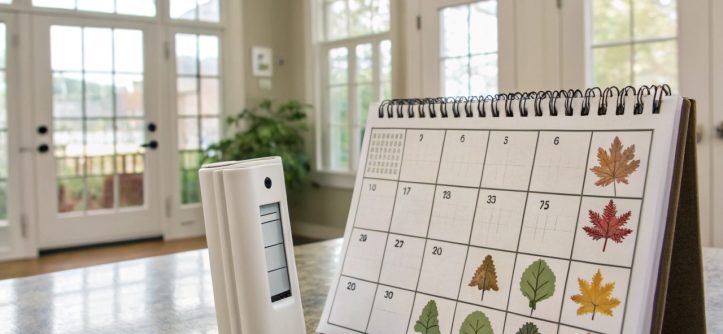
Radon is one of those invisible home concerns that can feel abstract until you realize how much it can change over time. Many homeowners and renters assume that once they’ve checked for radon, they’re covered, but the reality is more dynamic.
Understanding Radon and Why It Changes
Radon is a radioactive gas that naturally forms from the breakdown of uranium in soil, rock and water. It can enter homes through cracks in foundations, gaps around pipes and even through well water.
What makes radon especially concerning is that it’s a Class A carcinogen, meaning long-term exposure is linked to serious health risks, including lung cancer. Yet it’s colorless and odorless, so the only way to know your levels is through testing. However, radon levels aren’t static. They fluctuate due to environmental and structural factors, many of which shift with the seasons.
How Do Radon Levels Fluctuate Throughout the Year?
Radon levels fluctuate quite a bit throughout the year, depending on how your home interacts with weather, temperature and airflow.
Winter: Typically the Highest Levels
When comparing radon levels in winter vs summer, winter often comes out on top. During colder months, homes are sealed tightly to conserve heat. Windows stay closed, and ventilation decreases.
At the same time, warm air rising inside the home creates a vacuum effect, which pulls radon gas up from the soil and into living spaces. Snow cover can also trap radon near the ground, increasing the likelihood of it entering your home.
Spring and Fall: Fluctuating Transitions
Spring and fall are transitional seasons, which means radon levels can vary more unpredictably. Frequent changes in temperature, rainfall and barometric pressure can cause radon levels to spike and drop.
Rain can temporarily increase radon levels by saturating the soil and forcing gases upward into homes.
Summer: Often Lower, But Not Always Safe
In summer, homes are typically more ventilated since windows are open, and air circulates more freely. This can dilute radon concentrations, leading to lower readings.
However, that doesn’t mean the risk disappears. Air conditioning systems, especially in tightly sealed homes, can still create pressure differences that draw radon into the home. In some cases, levels may remain elevated even during warmer months.
Why Seasonal Tracking Matters
Because radon levels shift, a single test provides only a snapshot. Tracking changes over time offers a more complete picture of your home’s exposure risk.
Seasonal monitoring helps homeowners:
- Identify peak radon periods.
- Understand how the weather affects their home.
- Make informed decisions about mitigation.
- Verify whether existing systems are working effectively.
For renters and first-time buyers, this insight is especially valuable when evaluating a new living space.
How to Track Radon Levels Throughout the Year
Radon can be tested at any time, but tracking it effectively means going beyond a single reading. Because levels change with weather, temperature and ventilation, a more consistent, year-round approach gives a clearer picture of your home’s exposure.
Start by testing in winter, when radon levels are typically at their highest due to closed windows and reduced airflow. This provides a useful baseline and highlights potential worst-case conditions. From there, test again during a different season to see how levels shift under changing conditions.
For more reliable insights, keep a simple record of your results, noting the date, weather and ventilation habits during each test. Over time, these patterns can help you better understand how radon behaves in your home. Homeowners seeking deeper visibility may also consider continuous radon monitors, which track daily fluctuations and reveal trends tied to occupancy or environmental changes.
Finally, remember that home updates such as renovations, sealing cracks or installing new heating, ventilation and air conditioning (HVAC) systems can affect radon levels. Retesting after these changes ensures your home remains within a safe range and helps you stay proactive about indoor air quality.
What to Do If Levels Are High
If testing shows elevated radon levels, the next step is mitigation — reducing radon levels in your home. This is where working with an experienced provider can make the process smoother and more effective.
Companies like SWAT Environmental specialize in comprehensive radon solutions. As the nation’s largest provider of total radon mitigation services, SWAT Environmental brings together advanced technology, highly trained technicians and a strong commitment to healthier indoor environments.
Its approach stands out for several reasons:
- Highly trained technicians who prioritize professionalism and respect in every home
- Nationwide reach with local expertise, ensuring solutions tailored to regional conditions
- Reliable, long-term support, so homeowners aren’t left navigating issues alone
- A mission-driven focus on reducing exposure to a Class A carcinogen
Importantly, while it supports homeowners through the mitigation process and guides next steps, it also empowers individuals to take control of their testing and monitoring.
Tips for Maintaining Lower Radon Levels Year-Round
Even after mitigation, ongoing awareness is key. Here are a few habits that support safer indoor air:
- Keep ventilation balanced, avoid extreme pressure differences.
- Seal visible cracks in floors and walls.
- Maintain HVAC systems regularly.
- Re-test periodically to ensure levels remain stable.
Radon management isn’t a one-time task. It’s part of long-term home care.
FAQs
Are short-term tests reliable?
Short-term tests can provide useful snapshots, especially during winter. However, combining them with long-term monitoring gives a more complete picture of radon exposure.
Can radon levels change within a single day?
Yes, radon levels can fluctuate daily due to weather, pressure changes and home ventilation patterns. That’s why continuous monitoring can help track trends.
Do apartments and upper floors need testing?
While radon is typically higher in lower levels, it can still affect upper floors, especially in tightly sealed buildings. Testing is a good precaution regardless of floor level.
Does opening windows reduce radon?
Opening windows can lower radon levels for the time being by increasing ventilation, but it’s not a reliable long-term solution, particularly during colder months.
Staying Ahead of Seasonal Radon Level Changes in Homes
Understanding how radon levels fluctuate throughout the year empowers homeowners and renters to take control of their indoor environment. From winter spikes to summer dips, these changes are natural, but they don’t have to be unpredictable.
By testing across different radon testing seasons, tracking results over time and partnering with experienced providers like SWAT Environmental when needed, it’s possible to create a safer, more consistent living space. Radon may be invisible, but with the right approach, it doesn’t have to be unknown.